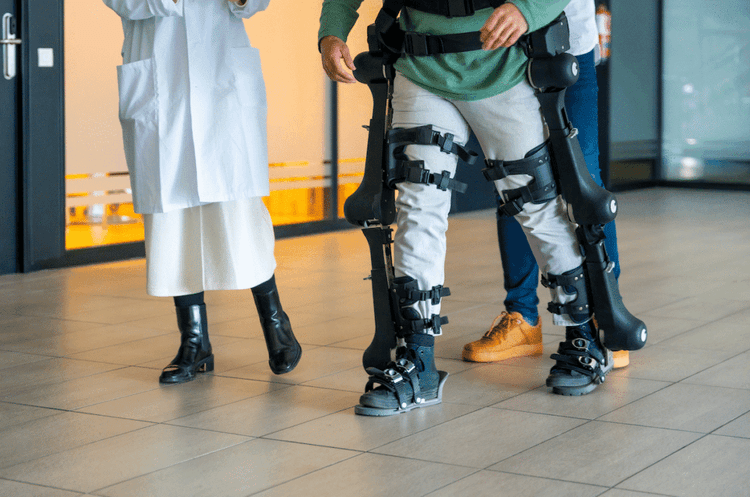
Caroline Laubach experienced unimaginable hardships before turning 22, enduring heart failure, a spinal stroke that left her paralyzed from the waist down, a heart transplant, and beating cancer not once but twice. Many considered it a miracle that she was even alive, but now something even more remarkable is happening as she walks, bends, and climbs stairs with the simple push of a joystick attached to a revolutionary robotic exoskeleton. Laubach was chosen as a test pilot for Wandercraft’s first of its kind self balancing exoskeleton, a device that allows her to stand up from a seated position, walk independently, remain standing at eye level with others, and move up and down stairs as if she weren’t paralyzed at all. The incredible technology works by attaching to her body and responding to a joystick control near her left hand, giving her an opportunity she never thought she would have again in her life.
Before receiving the exoskeleton, Laubach’s inspiring determination and leadership as secretary of the Disabled Students Union at Cedar Crest College in Pennsylvania earned her the honor of Survivor of the Year at the American Heart Association Heart Ball. While over a dozen similar exoskeletons have been approved by the FDA, they remain largely inaccessible to the general public due to costs that can reach up to 100,000 dollars, though Medicare has recently begun reimbursing purchases for permanently disabled individuals. Wandercraft continues testing and refining its Eve exoskeleton with hopes of making it commercially available in coming years, while also developing devices for patient rehabilitation and physically demanding tasks. Caroline’s story proves that as long as people continue to advocate for breakthrough technologies like exoskeletons, hope remains for those facing impossible circumstances to reclaim their independence and mobility.