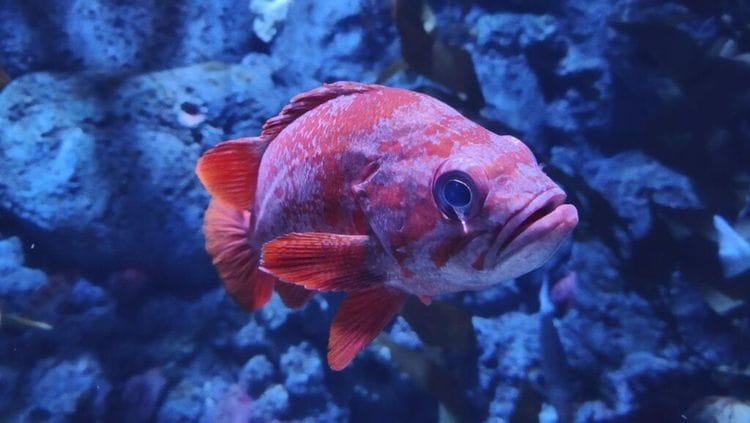
Scientists have identified and matched underwater sounds to specific fish species living off the coast of British Columbia in a discovery that could help improve how fish populations are monitored and protected. This will finally answer the age old question of what noises fish make to speak to each other beyond the typical woof for dogs or meow for cats. Researchers from the University of Victoria documented more than 1,000 fish sounds recorded in Barkley Sound and linked them to eight rocky reef species including copper, quillback, black, canary and vermilion rockfish. A machine learning model was trained using 47 sound characteristics including frequency and duration and was able to identify the species producing a sound with up to 88 percent accuracy, with some sounds being highly distinctive such as black rockfish producing long low growling sounds while quillback rockfish made short knocking and grunting noises.
The study found that fish make sounds during a wider range of behaviors than previously documented with many species recorded making sounds while fleeing from predators or larger fish, during feeding and aggressive interactions, and not just during courtship and territorial displays as scientists once believed. By using stereo cameras researchers were able to measure fish size and compare it to sound characteristics discovering that smaller fish generally produced higher pitched sounds than larger fish, suggesting that size could potentially be estimated using acoustic recordings alone without ever disturbing the animals. The researchers say this approach could support future conservation efforts since passive acoustic monitoring is minimally invasive and allows data to be collected over long periods even in low visibility or hard to access environments, with scientists believing underwater acoustic monitoring could become an important new tool for fisheries management and marine conservation as the technology continues to advance.
Source: https://www.newsweek.com/scientists-discover-how-to-speak-like-a-fish-11453425