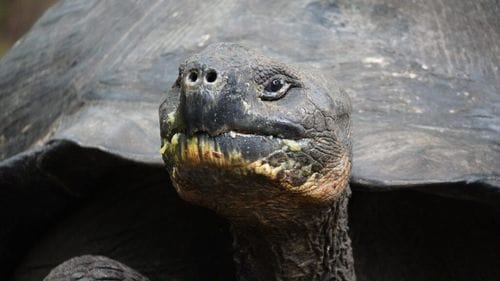
When Charles Darwin visited the Galapagos Islands in 1835, giant tortoises were still lumbering freely across Floreana Island in great numbers, serving as the quiet architects of the entire ecosystem around them, grazing vegetation, clearing paths, and spreading seeds across the landscape. Within just a few decades, heavy hunting by passing ships and the arrival of invasive predators had wiped them from the island completely, leaving Floreana without its most important residents for more than 150 years. Now, in one of the most remarkable conservation milestones in recent memory, 158 giant tortoises have been returned to Floreana, guided to their release sites with the help of a truly unlikely partner: NASA. Scientists used data from multiple NASA satellite missions to carefully map the island’s vegetation, rainfall, temperature, and terrain, building detailed habitat models that predicted not just where the tortoises could survive today, but where conditions would remain best for them across the next 40 years.
The tortoises themselves are the descendants of animals discovered on another island in 2000, whose DNA revealed they carried Floreana ancestry, most likely because sailors had moved tortoises between islands well over a century earlier. A dedicated breeding program was launched from that discovery and eventually produced the hundreds of offspring now being released back into the wild, completing a conservation loop that stretches across generations. The Galapagos National Park has now returned more than 10,000 tortoises to the archipelago over the past 60 years, and this latest milestone is just the opening move of a far larger effort to restore Floreana fully, with 11 additional native species slated to follow. Conservationists say the tortoises are not just a symbol of recovery but a living, breathing foundation on which an entire island ecosystem can now be rebuilt.
Source: https://www.newsweek.com/nasa-helps-return-giant-tortoises-to-galapagos-after-150-years-11563707