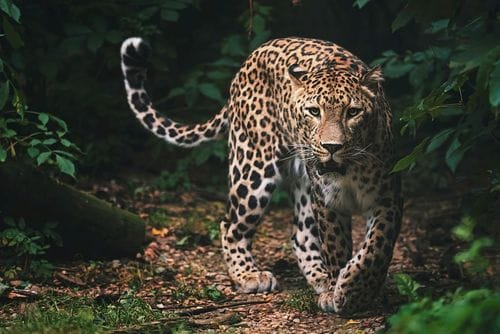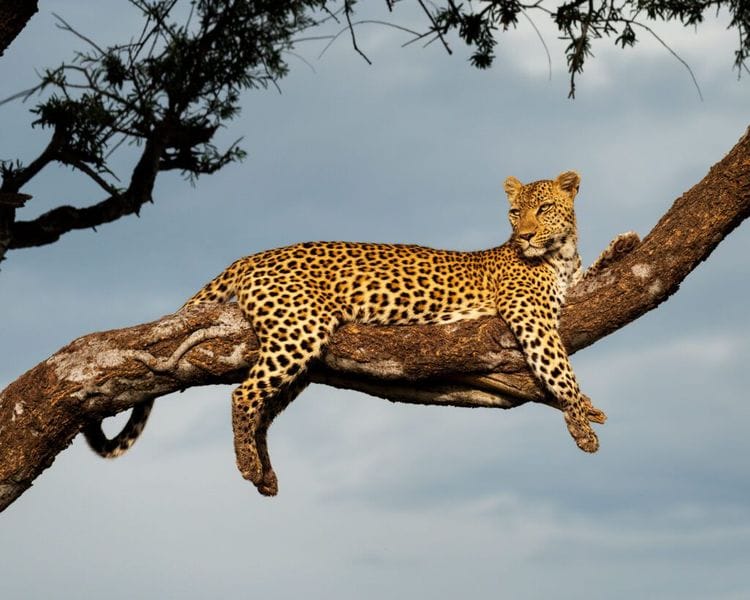
For an astonishing 170 years there hasn’t been a leopard sighting on the western coast of South Africa, but that recently changed when South Africa National Parks published a camera trap photograph of a leopard in West Coast National Park showing the elusive predator has recolonized an area where it has long been absent. Conservationists have hailed the moment as a milestone for rewilding and conservation programs that paved the way for the cat’s return to territory it was extirpated from by the mid 1800s as part of a range decline across sub Saharan regions. SANparks, private landowners, the University of the Western Cape, and the local government of Saldanha Bay all lent their cooperation to two conservation groups called the Landmark Leopard and Predator Project who spent the last 20 years facilitating the leopard’s return.
The groups monitored the area between Cape Town and the Berg River while rebuilding wildlife corridors in the northern, western, and eastern cape to connect fragmented habitat that would allow leopards to move freely and safely through the landscape. A crucial shift in project focus from just providing protection to reserves toward promoting human wildlife coexistence has been key to the success, with SANparks spokesperson JP Louw emphasizing that the return underscores the power of long term conservation partnerships. To the north in Zambia, conservation NGO Panthera has seen a tripling of estimated leopard numbers in Kafue National Park, which at 22,700 square miles is two and a half times larger than Yellowstone. Jon Ayers, Board Chairman of Panthera, notes that while the project has been exciting with tremendous opportunity for the ecosystem to grow back to its original vibrancy, the area that’s been beaten up for decades still has enormous recovery potential. The leopard’s return to the Western Cape after 170 years proves that with dedication, cooperation, and a focus on coexistence, wildlife can reclaim ancestral habitats once thought lost forever.