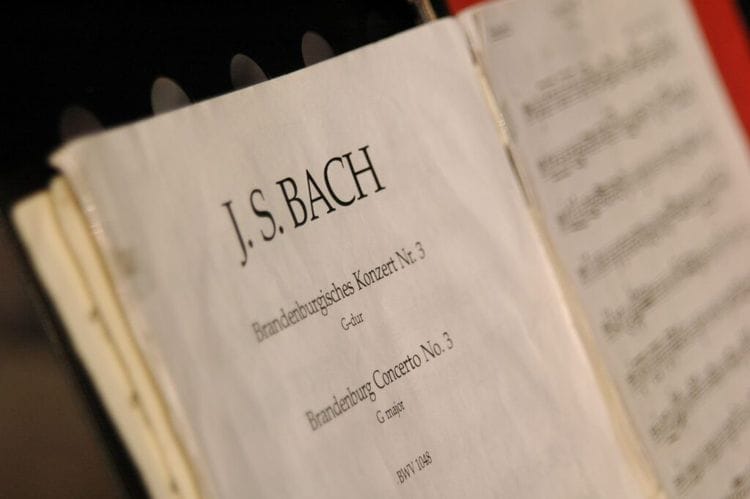
Previously unknown organ works by Johann Sebastian Bach have been presented and performed in Germany for the first time in 320 years after researcher Peter Wollny spent three decades confirming their authenticity following their discovery in 1992 at the Royal Library of Belgium in Brussels. The two pieces, Chaconne in D minor BWV 1178 and Chaconne in G minor BWV 1179, were undated and unsigned when Wollny first encountered them while cataloguing Bach manuscripts, requiring 30 years of painstaking work to verify they were indeed composed by the legendary musician. Germany’s Culture Minister Wolfram Weimer called the discovery “a great moment for the world of music” as the works were performed at St Thomas Church in Leipzig, where Bach is buried and where he worked as a cantor for 27 years.
Dutch organist Ton Koopman had the honor of being the first person to perform the pieces in over three centuries, saying he was proud to play works “of a very high quality” that would be “a great asset for organists today, as they are also suitable for smaller organs.” The compositions are believed to have been written early in Bach’s career when he was working as an organ teacher in Arnstadt, Thuringia, and were likely written down in 1705 by one of his pupils, Salomon Günther John. Wollny, now director of the Bach Archive in Leipzig, explained that the works displayed several characteristics unique to Bach, with stylistic features found in his works from that period but not in those of any other composer. Saying he was “99.99% sure that Bach had written the two pieces,” Wollny successfully had them added to the official catalogue of Bach’s works, proving that sometimes the most extraordinary musical discoveries require nothing more than decades of dedication, scholarly patience, and an unwavering belief that what you’ve found is worth fighting to authenticate for the world to finally hear.