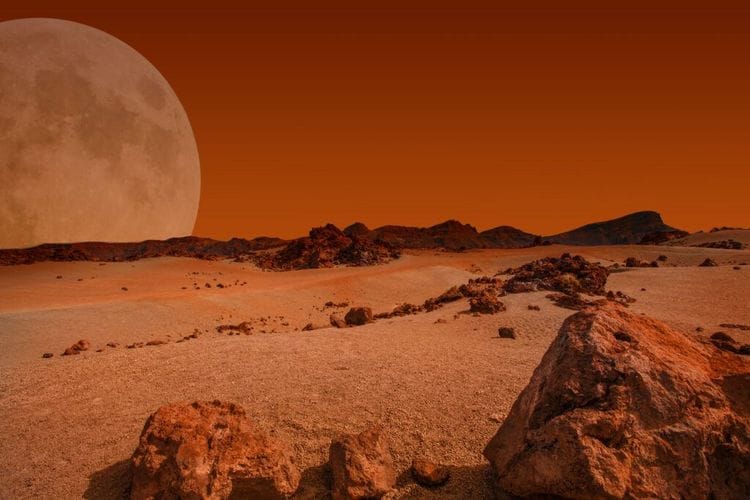
NASA’s Perseverance rover has discovered what could be the clearest evidence of ancient life on Mars after analyzing mudstone samples from the Sapphire Canyon core, revealing mineral patterns that on Earth are strongly associated with microbial activity. The rock sample from “Chevaya Falls” contains vivianite and greigite minerals arranged in distinctive “leopard spot” patterns alongside organic carbon, creating a combination that matches what scientists see in Earth sediments where microbes process iron and sulfur for energy. Acting NASA Administrator Sean Duffy called it “the closest we have ever come to discovering life on Mars,” though he stressed this represents a potential biosignature rather than definitive proof of past life.
The minerals formed in low-temperature, water-rich conditions that would have been compatible with life, and the chemical signatures suggest the same type of electron transfer reactions that some Earth microbes use for metabolism. Scientists are being extremely cautious with their language, emphasizing that unknown non-biological chemistry could potentially explain these patterns, which is why the sample has been sealed for eventual return to Earth where advanced laboratory tests can provide more definitive answers. The discovery sits early on NASA’s Confidence of Life Detection scale, requiring additional testing to rule out contamination and non-biological explanations before scientists can claim high confidence in finding Martian life. This breakthrough represents either evidence of ancient microbial life on Mars or a fascinating window into how the planet cycled key elements like iron, sulfur, and phosphorus without biology.