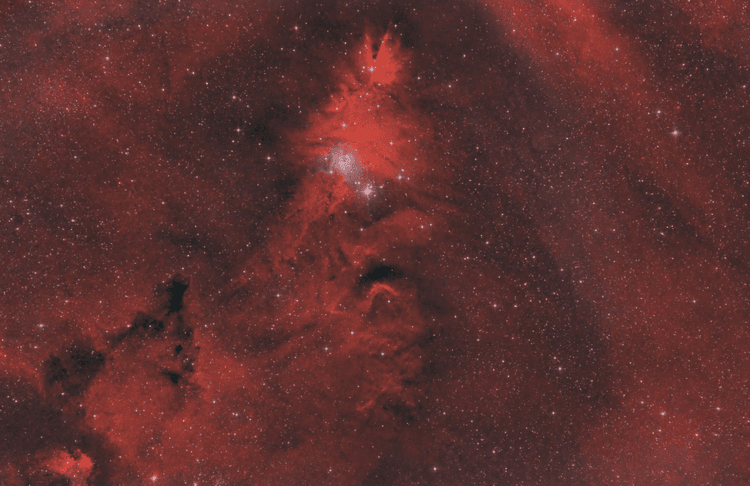
A microscopic Christmas tree is the seasonal highlight of a remarkable science project called New Perspectives that found scary comparisons between the vast universe and the tiny microscopic world we cannot see with the naked. The project takes space based images from Chandra which is one of NASA’s Great Observatories alongside Hubble and James Webb Space Telescopes and creates side by side comparisons with winning images from the annual Nikon Small World microscopy competition. Highlights include a cluster of young stars nicknamed the Christmas Tree Cluster paired with collagen fibers and fat cells captured under a laser microscope while another eye catching duo compares heart tissue exposed to radiation showing tiny dots and tracks from high energy particles on cells with a bright young star seen in infrared light wrapped in the gas and dust of a stellar nursery.
Astronomy and microscopy are both fields built on the challenge of making the invisible visible with each discipline relying on light and data to reveal hidden structures whether across the vastness of space or within the intricacies of living cells. Telescopes act as light buckets collecting faint light across vast distances with mirrors and detectors often orbiting in space to avoid Earth’s atmosphere while microscopes are more like light funnels focusing on the tiny using lenses lasers or electron beams to magnify the minute worlds around us. Despite differences in scale the two fields converge through a common visual language proving that vision is both a tool and a construction that not only advances science but also reshapes how we perceive our place in the cosmos.
Nature
Uplifting
NASA's Christmas Project Comparing Vast And Small