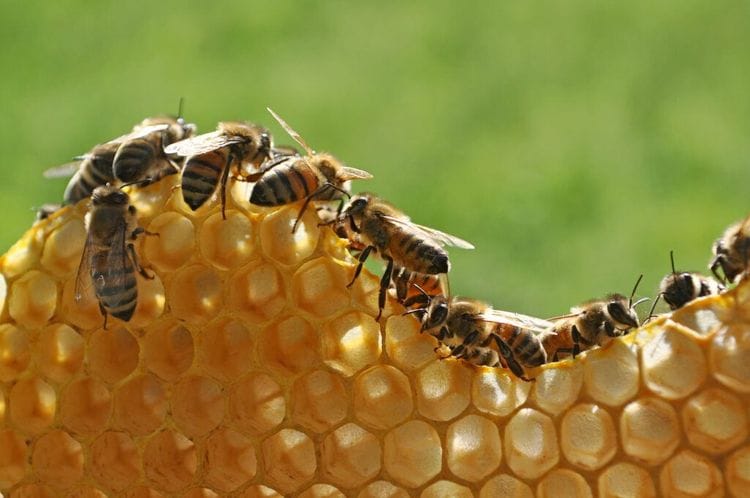
In a Caribbean cave scientists made a groundbreaking discovery that rewrites what we know about ancient bee behavior. About 20,000 years ago, bees living in Cueva de Mono in the Dominican Republic created their nests not in soft soil like their modern descendants, but inside the empty tooth sockets of prey animals eaten by giant ancestors of the barn owl. Dr. Lazaro Viñola-López of the Field Museum in Chicago was examining mammal fossils when he noticed something strange: the sediment filling the tooth sockets looked deliberately placed rather than randomly accumulated, reminding him of ancient wasp cocoons he’d seen years earlier.
Using CT scans to examine the fossils without destroying them, the research team confirmed that the bees had mixed their saliva with dirt to create tiny individual mud nests for their eggs right inside the bones. The researchers believe a lack of topsoil outside the cave combined with an abundance of silt inside led to this bizarre nesting behavior that has never been documented before. The cave itself represents layers of paleontological history containing fossils from more than 50 different species including rodents, sloths, birds, reptiles, and the colossal owls that left generations of coughed-up pellets on the cave floor. The discovery was almost lost forever when the team learned a local resident was preparing to use the scientifically valuable cave as his toilet, forcing them to launch a rescue mission to extract as many fossils as possible before they were destroyed. The findings published in Royal Society Open Science prove that even when searching for large vertebrate fossils, scientists need to pay attention to the tiny traces left by insects, as they can reveal entire ecosystems that vanished millennia ago.