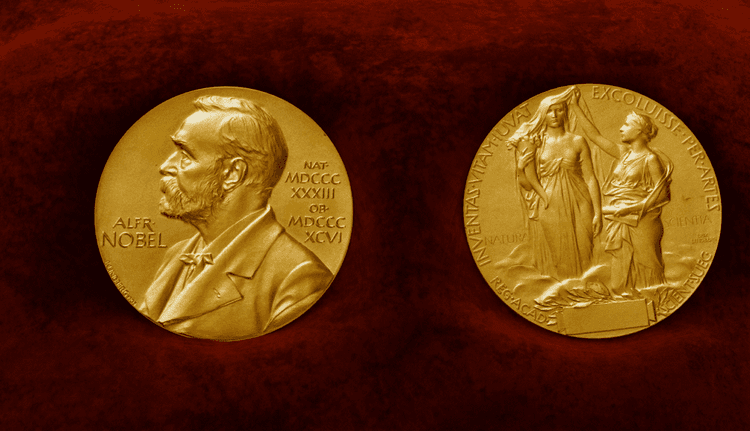
The Nobel Prize in Physics has been awarded to John Clarke, Michel H. Devoret, and John M. Martinis for groundbreaking work on quantum mechanics performed in the 1980s that is now enabling the development of incredibly powerful quantum computers. Their discovery involved demonstrating that quantum tunneling, where particles like electrons appear to break the laws of physics by traveling through energy barriers, could be reproduced in real-world electrical circuits and not just in the subatomic quantum realm. Professor Clarke, who completed this work four decades ago, admitted he was completely stunned by the recognition and never imagined at the time that it might lead to a Nobel Prize.
The implications of their findings have been profound and far-reaching, forming the foundation for the technology in mobile phones, cameras, fiber optic cables, and now quantum computing chips. Their work on macroscopic quantum mechanical tunneling and energy quantization in electrical circuits has laid the groundwork for superconducting qubits, one of the main hardware technologies powering the quantum computing revolution. The three scientists will share prize money of 11 million Swedish kronor as recognition for discoveries that seemed bewildering even by physics standards but have transformed modern technology. What started as curiosity-driven experiments in the tiny quantum world has become the basis for computing systems that could revolutionize everything from medicine to artificial intelligence.