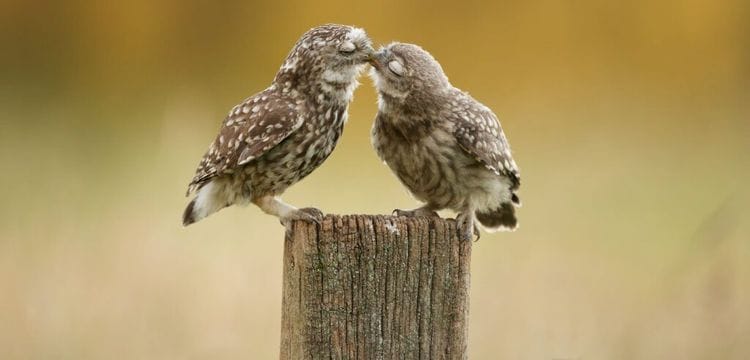
Scientists have reconstructed the evolutionary origins of kissing and discovered that mouth on mouth smooching evolved more than 21 million years ago, likely practiced by the common ancestor of humans and other great apes. Lead researcher Dr. Matilda Brindle from the University of Oxford explained that because humans, chimps, and bonobos all kiss, it’s likely their most recent common ancestor also engaged in this behavior that presents something of an evolutionary puzzle since it has no obvious survival or reproductive benefits. The study, published in the journal Evolution and Human Behaviour, defined kissing very precisely as non aggressive, directed oral oral contact “with some movement of lips or mouthparts and no food transfer” to ensure they were comparing the same behavior across different species.
By finding evidence of kissing in wolves, prairie dogs, polar bears who engage in very sloppy kisses with lots of tongue, and even albatrosses, scientists were able to construct an evolutionary family tree to pinpoint when this behavior most likely evolved. The research also concluded that Neanderthals probably kissed too, and that modern humans and Neanderthals may have even smooched one another, evidenced by the fact that both species shared an oral microbe found in saliva, meaning they must have been swapping spit for hundreds of thousands of years after the two species split. While the study successfully pinpointed when kissing evolved, it couldn’t answer why, though theories suggest it arose from grooming behavior in ape ancestors or might provide an intimate way to assess the health and compatibility of a partner. Dr. Brindle emphasized the importance of studying this behavior seriously rather than dismissing it as silly because of its romantic connotations in humans, noting that “it’s important for us to understand that this is something we share with our non human relatives” that deserves scientific attention.