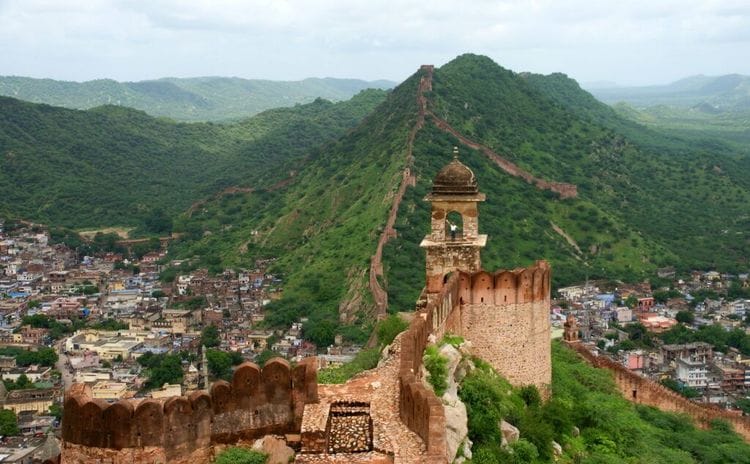
When Shaurya Goyal received a phone call at 1:30 AM about a massive centuries-old peepal tree being cut down in Jaipur’s Dol Ka Badh forest, he rushed to find workers struggling to remove just one root that weighed 20 kilos and was as thick as most tree trunks. That midnight rescue sparked a citizen movement involving over 1,000 people including children as young as 7, all fighting to save one of Jaipur’s last forests from infrastructure development that’s slowly causing it to “bald” like a man losing hair. The forest shelters over 80 bird species including the near-threatened Alexandrine Parakeet that has vanished from most cities, plus cuckoos, bee-eaters, golden orioles, and even rare Rose Finches that depend on this green sanctuary.
On May 15-16, 2025, volunteers documented 446 trees in threatened sections alone, marking each with chalk and GPS while uploading data to iNaturalist so records couldn’t be disputed, proving the forest’s value tree by tree and species by species. One 7-year-old boy has become a symbol of the movement, arriving at gatherings with homemade posters and once wearing a full peacock costume, his tiny bicycle basket filled with handmade placards as he marches proudly alongside adults. The forest doesn’t just shelter wildlife, it cools Jaipur’s brutal summers by 3-4 degrees, recharges aquifers, prevents erosion, and provides the breathing space a city with less than 8% forest cover desperately needs. On weekends, nearly a thousand people form human chains around threatened areas, reading poetry, holding signs, or simply standing in silence, proving that sometimes all it takes to save something precious is people who refuse to walk away.