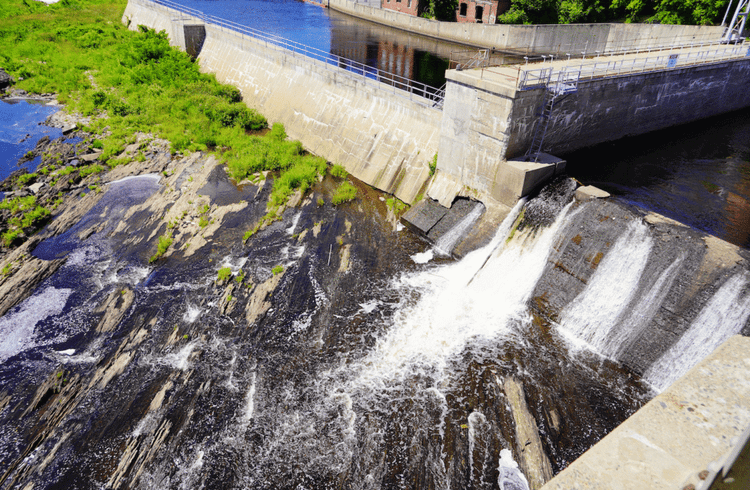
The Nature Conservancy purchased four dams along Maine’s lower Kennebec River for $138 million in a deal that will open hundreds of miles of prime spawning habitat for endangered Atlantic salmon for the first time in a century. The Weston, Shawmut, Hydro-Kennebec, and Lockwood dams currently prevent ocean-going fish like salmon, river herring, Atlantic sturgeon, and American eel from accessing ancestral spawning grounds upriver. Right now, only about one-twelfth of the historic salmon population returns to the Kennebec, where they’re captured at Lockwood Dam and actually trucked up roads past the next three dams to spawn. The decommissioning process will take five to ten years while the dams continue generating power, similar to California’s recent Klamath River dam removal that saw fish returning to spawn within a single season.
Atlantic salmon are near-threatened worldwide, with certain North Atlantic stocks almost completely disappeared, making access to Sandy River via the lower Kennebec crucial for species survival. The Nature Conservancy says it’s 100% committed to working with local stakeholders including Sappi North America’s Somerset Mill, which relies on one dam for water needs. Fishing advocacy groups have argued for decades that these dams need removal, and examples from Maine’s Penobscot River show that dam removal produces long-term economic and environmental improvements. The Klamath River success story proved that ancestral instincts remain intact despite generations of fish being blocked, giving hope that salmon will quickly reclaim their historic spawning grounds once these barriers come down.