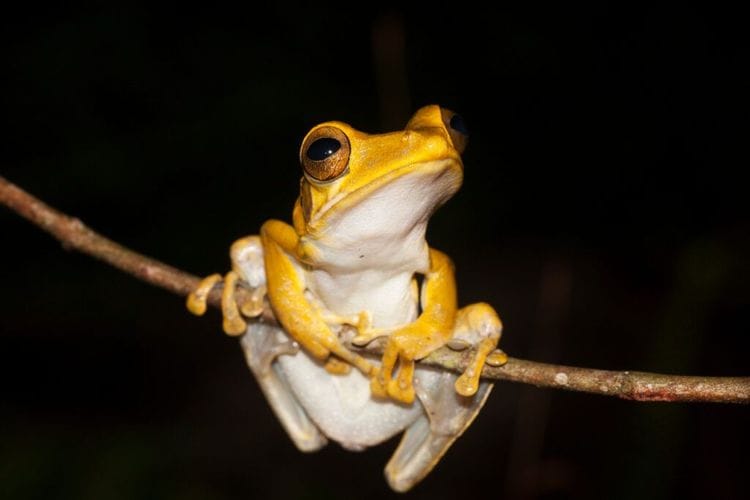
After four years of painstaking work, researchers at Southern Cross University achieved what seemed impossible by successfully breeding the endangered red and yellow mountain frog for the first time in captivity. The challenge was enormous because these tiny amphibians hatch at just 3 millimeters in size and require perfectly replicated rainforest conditions including specific temperatures, muddy substrates, native plants, and even recorded frog chorus calls to trigger breeding. Seven precious frogs were ceremonially released into a secret location in Tooloom National Park, marking a crucial milestone in the fight to save a species facing a 60 percent habitat loss by 2055 due to climate change.
The mountain frogs face a triple threat from habitat destruction, invasive feral pigs that destroy their creek habitats, and rising temperatures that push them off their mountaintop homes with nowhere higher to go. Each population has distinct coloring and genetics that must be carefully preserved, making the breeding program incredibly complex as scientists work to bolster severely impacted remote populations. Research fellow Liam Bolitho explained that everything from temperature to sound had to be replicated perfectly, or the breeding attempts would fail completely. This breakthrough offers hope that captive breeding can serve as a lifeline for species with extremely limited habitat, proving that sometimes the smallest victories can have the biggest impact on conservation.