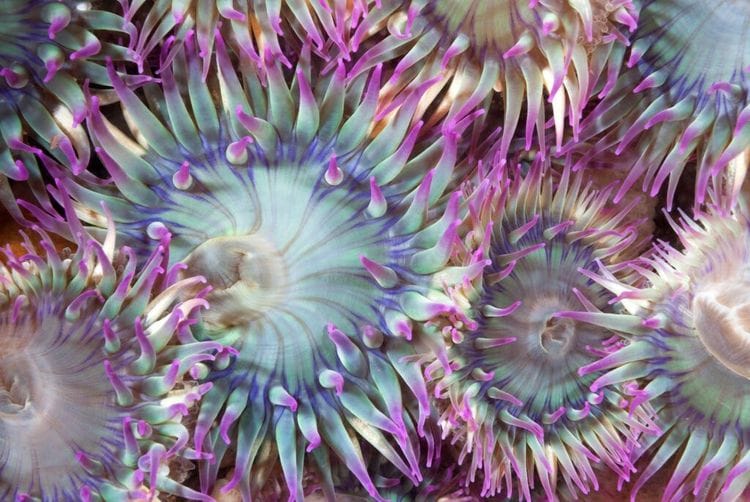
Breathtaking blackwater photography captured during nighttime dives has revealed a never-before-seen relationship between juvenile fish and sea anemones that’s far more diverse and strategic than the simple friendship portrayed in Finding Nemo. Images published in the Journal of Fish Sciences show filefish, driftfish, pomfrets, and young jacks carrying larval tube anemones or button polyps in their mouths, apparently using the stinging invertebrates as portable shields for self-defense against predators. Gabriel Afonso, lead author and Ph.D. student at William & Mary, says this emerging field of blackwater photography made the discovery possible by revealing surprising interactions between tiny organisms that occur in open water during the night.
Rich Collins, a consultant at the Florida Museum of Natural History and one of the contributing divers, has witnessed vulnerable larval fish carrying noxious or stinging creatures for defensive purposes, including filefish carrying box jellyfish in their mouths despite their dangerous sting. While the sting from a larval anemone might not kill a predator, researchers believe it would be unpalatable enough to deter attacks on the tiny fish carrying them as living weapons. This could represent a new form of mutualism where both species benefit, as the anemone gets transported to new locations for dispersion while the fish gains protection from being eaten. The discovery proves that the ocean’s nighttime world contains countless unseen interactions happening between creatures of all shapes and colors, with juvenile fish demonstrating remarkably sophisticated survival strategies that science is only beginning to understand.