The Largest School District In America Banned AI For 600,000 Students.
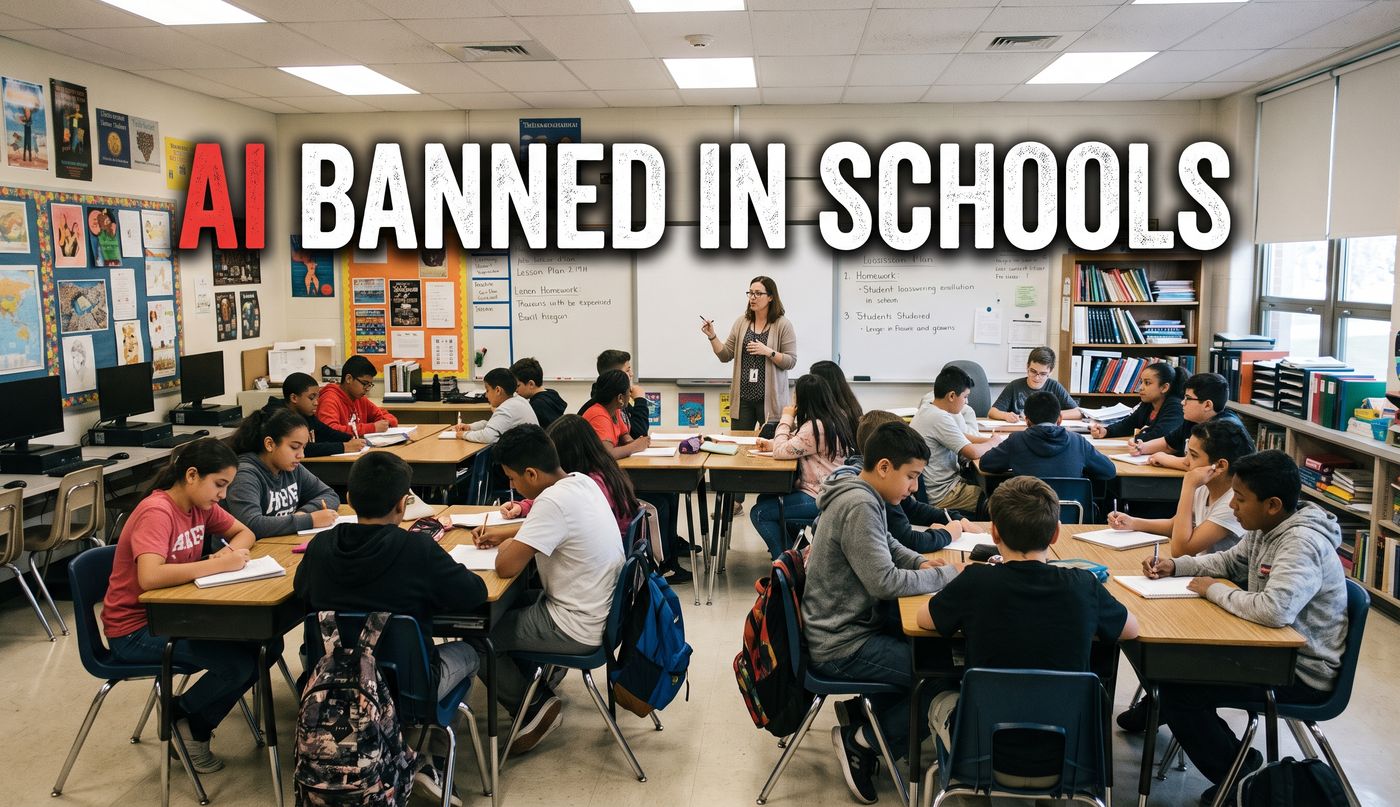
New York City Mayor Zohran Mamdani and Schools Chancellor Kamar Samuels announced a one-year moratorium on student-facing generative AI for all students from the two-year-old preschool program through eighth grade in New York City Public Schools, the largest school system in the United States, covering approximately 600,000 students or roughly two-thirds of the city's total public school enrollment. The policy, described by city leaders as the most expansive AI moratorium in the country, eliminates all software that uses student-facing generative AI including chatbots, AI tutors, and companion chatbots, which are also banned through high school regardless of grade level. The moratorium does not apply to teachers, who may continue using AI tools for lesson planning and administrative tasks but are explicitly prohibited from using them for grading or crisis management. Screen time limits also accompany the policy, with 30 minutes recommended for students in grades three through five and 45 minutes for middle schoolers. High school students are not covered by the moratorium and will instead receive twice-yearly AI literacy classes, and a limited pilot will introduce some high schoolers to selected AI platforms under educator supervision. Mamdani said he had yet to see a single study showing that AI is beneficial for students in elementary or middle school, and framed the moratorium as a necessary pause to study the impacts of the technology before allowing it further into the classroom.
The city's position is a direct challenge to the tech industry's framing of AI in education as both inevitable and beneficial, and Mamdani was explicit about the pushback. The tech industry wants us to believe that AI-powered early education is not only inevitable but necessary, he said. We do not see it that way. Samuels said the policy was meant to protect the critical thinking skills students need most, and tied it to a broader effort to reduce students' dependence on screens and automated tools during the school day, building on a bell-to-bell cellphone ban the city had already implemented. A city-wide review of all technology tools used across the school system is also underway, with plans to eliminate any tools determined not essential to learning. The announcement drew praise from parents and education advocates who had been calling for a two-year moratorium, though some said the policy did not go far enough because it still permits centrally approved instructional programs and exempts high schools. Michael Mulgrew, president of the United Federation of Teachers, praised the screen time limits but said the AI policy left many questions unanswered about how the education department would demand that the products it purchases include adequate AI safeguards. Experts say New York City's decision is likely to influence how other school districts across the country approach AI given the city's size, visibility, and role as an early adopter of both technology and policy in American education. The moratorium runs through the 2026-27 school year, at which point the city will assess what, if anything, comes next.