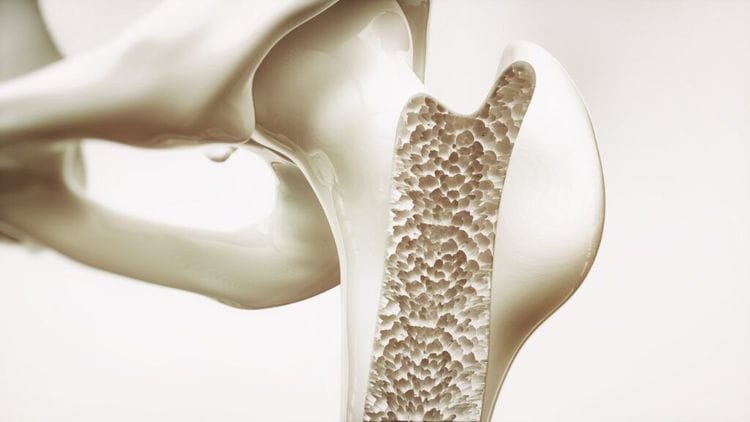
Scientists at Leipzig University in Germany have discovered a molecular switch called GPR133 that plays a central role in building and maintaining healthy bones, offering new hope for millions suffering from osteoporosis. When researchers genetically impaired this receptor in mice, the animals developed early bone density loss similar to human osteoporosis, proving its critical importance in bone health. The breakthrough came when the team used a substance called AP503 to activate GPR133, significantly increasing bone strength in both healthy and osteoporotic mice by stimulating bone-forming cells while inhibiting bone-destroying cells.
Professor Ines Liebscher explains that in bone tissue, GPR133 naturally activates through the interaction of neighboring bone cells and mechanical strain, triggering signals that result in stronger, more resilient bones. In an earlier study, the same Leipzig research team discovered that AP503 activation also strengthens skeletal muscle, creating a dual benefit for aging populations who need both strong bones and muscles. Dr. Juliane Lehmann, lead author of the study published in Nature, emphasizes that this parallel strengthening highlights the receptor’s tremendous medical potential for elderly patients. The discovery could be used both to strengthen healthy bones and rebuild weakened ones, particularly in postmenopausal women who face the highest osteoporosis risks, offering a safe and long-lasting treatment option that targets the root cause rather than just managing symptoms.