NYC Is Installing Basketball Courts That Double As Giant Storm Drains That Look Amazing
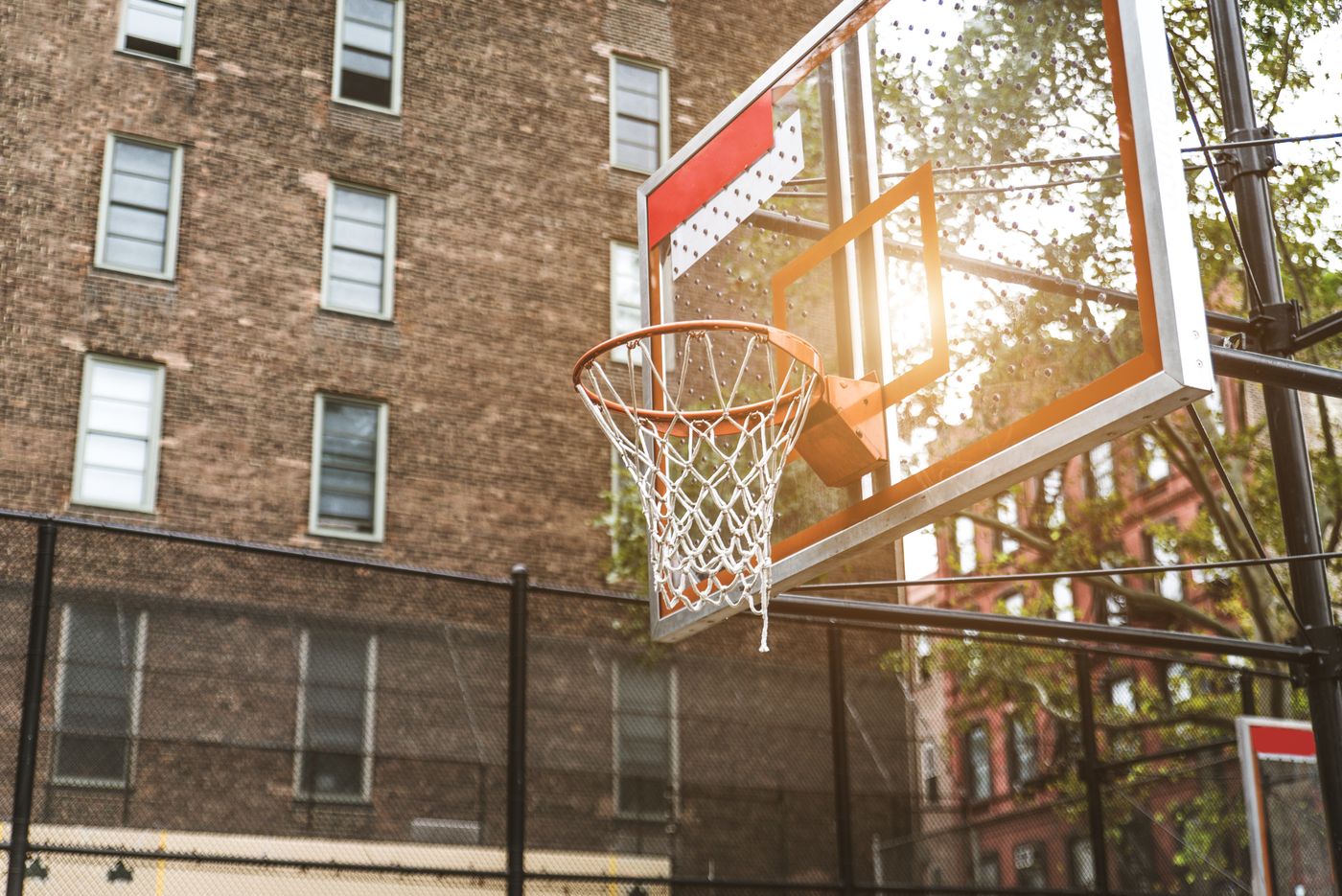
At the NYCHA South Jamaica Houses in Queens, a Brooklyn-based landscape architecture studio called Grain Collective has built two sunken basketball courts that are, on a clear day, completely ordinary basketball courts. They are colorful, well designed, and popular with residents. The edges double as stadium seating where people can watch games and hang out, and the space can host movie nights, farmers markets, and community events. But when a storm hits and the rain comes fast, the courts become something else entirely: the world's most functional and visually interesting storm drain. Because the courts sit three feet below grade, rainwater flows into them naturally during flash floods, and the $5 million drainage system beneath them can hold 330,000 gallons of water, roughly half the volume of an Olympic-sized swimming pool, keeping it out of the city's already overwhelmed sewer system and off the streets and out of basements of surrounding neighborhoods. When the storm passes, the water dissipates. The courts go back to being basketball courts. The project is called Water Square and is modeled on similar infrastructure in Copenhagen and Rotterdam.
New York City's sewer system was built at the turn of the 20th century and was designed to handle what engineers once called a five-year storm, roughly 1.75 inches of rain per hour. That kind of rainfall now happens several times a year. When the remnants of Hurricane Ida hit in 2021, two inches per hour flooded basements and subways and killed more than a dozen New Yorkers. More recently, a July 2026 flash flood sent 29 inches of street-level water through parts of Queens in under an hour. The Water Square basketball courts are part of a broader Cloudburst infrastructure program that Mayor Mamdani has invested $95 million into for the Homecrest neighborhood in Brooklyn, with additional projects already underway or planned in Maspeth, Corona, Kissena Park, Parkchester, East New York, and East Harlem. At Jefferson Houses in East Harlem, a second Cloudburst site uses permeable concrete and underground storage tanks rather than sunken courts, showing that the approach can adapt to different spaces and communities. The city is also on track to install 500 flood sensors across all five boroughs. Every dollar spent on this infrastructure, Mayor Adams noted before leaving office, saves approximately seven dollars in prevented damage. On a sunny day in South Jamaica, the courts are full of people playing basketball. On a rainy one, they are doing something just as important.
Source:https://www.goodgoodgood.co/articles/new-york-city-water-square-basketball-courts-flooding