One Of The Biggest Dinosaur Footprints Ever Found Is Also One Of The Best Preserved In History
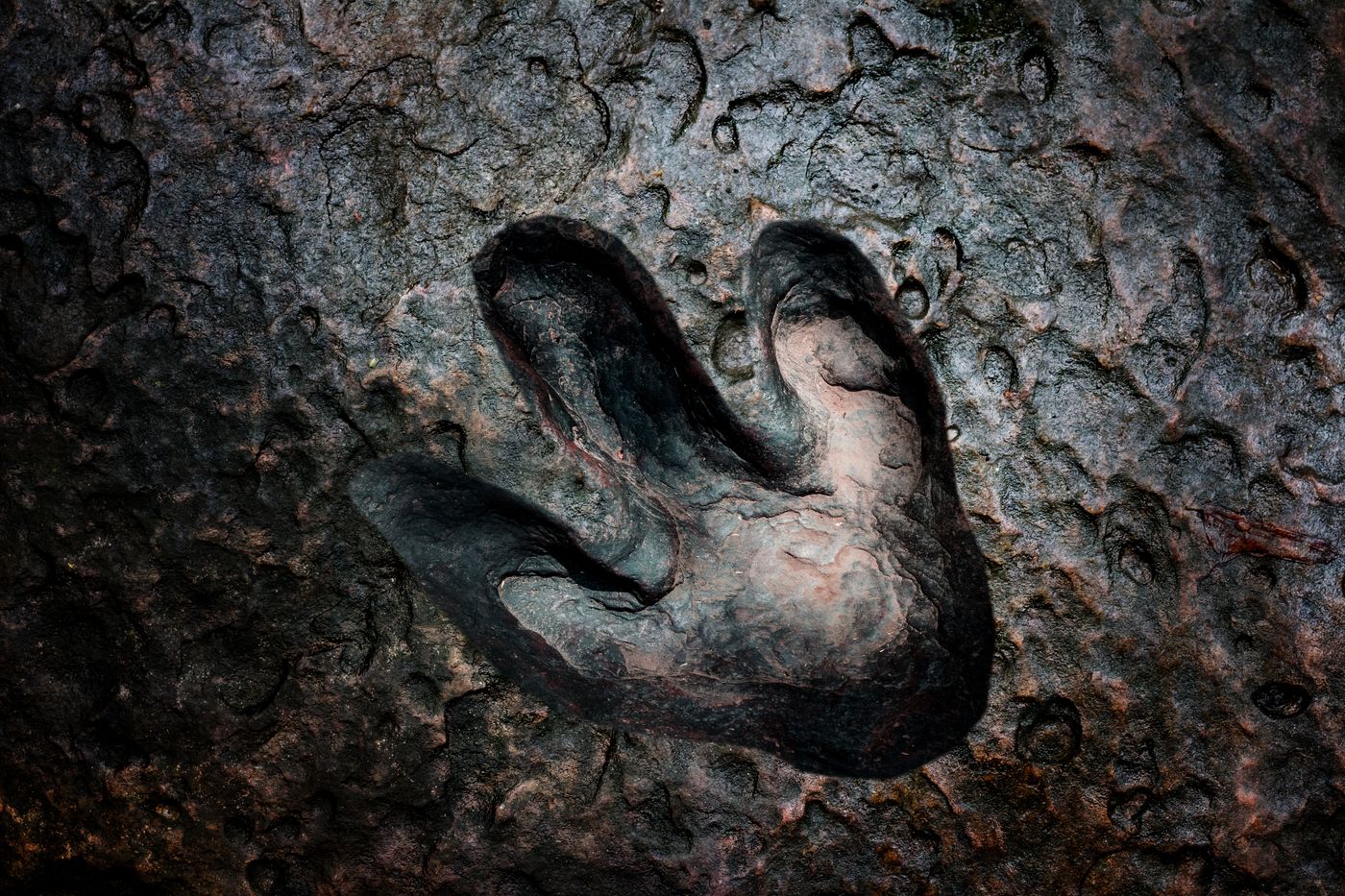
In the Gobi Desert, a fossil-rich expanse stretching across northern China and southern Mongolia, a Mongolian-Japanese research expedition unearthed one of the most remarkable dinosaur footprints ever recorded: a titanosaur track measuring 77 centimetres, or just over 30 inches, across, with the claw marks of each toe still clearly visible in the stone. Researchers from Okayama University of Science described it as a very rare discovery, noting that finding a well-preserved fossil footprint of more than a meter long with intact claw impressions is something that does not happen often. Titanosaurs were among the largest animals ever to walk the Earth, reaching up to 30 metres in length and weighing up to 90 metric tonnes, and their footprints, when found this complete, provide paleontologists with some of the most direct physical evidence of how they moved across the prehistoric landscape. The fact that this particular print preserved not only the full outline of the foot but the deep individual claw marks means scientists can now study how the titanosaur distributed its weight and interacted with the ground beneath it in ways that bone fossils alone cannot reveal.
The Gobi Desert's role as one of the world's premier fossil sites comes from the conditions that prevailed there during the Late Cretaceous period, roughly 66 to 100 million years ago, when the region was not a dry desert but a lush, muddy landscape ideally suited for preserving the traces of heavy animals walking across soft ground. That mud hardened and lithified over millions of years, trapping not only bones but tracks, behavior, and evidence of ecosystems that no longer exist. The discovery joins a growing list of remarkable tracks found around the world, including a carnivorous dinosaur footprint measuring 115 centimetres across found in Bolivia and sauropod tracks on the Isle of Skye in Scotland, but the Gobi footprint stands out for its preservation. For scientists studying titanosaur locomotion, the traditional view has been that these animals were slow and lumbering, but the depth and definition of this particular print raises new questions about their agility and how they used their claws in different terrain. Researchers plan to use 3D scanning and sediment analysis to extract as much information as possible from the find, and further excavations in the area are already being planned.
Source:https://techfixated.com/one-of-the-biggest-dinosaur-footprints-ever-has-just-been-unearthed/