The US Banned New Foreign-Made Robot Vacuums. Here's What It Means For You.
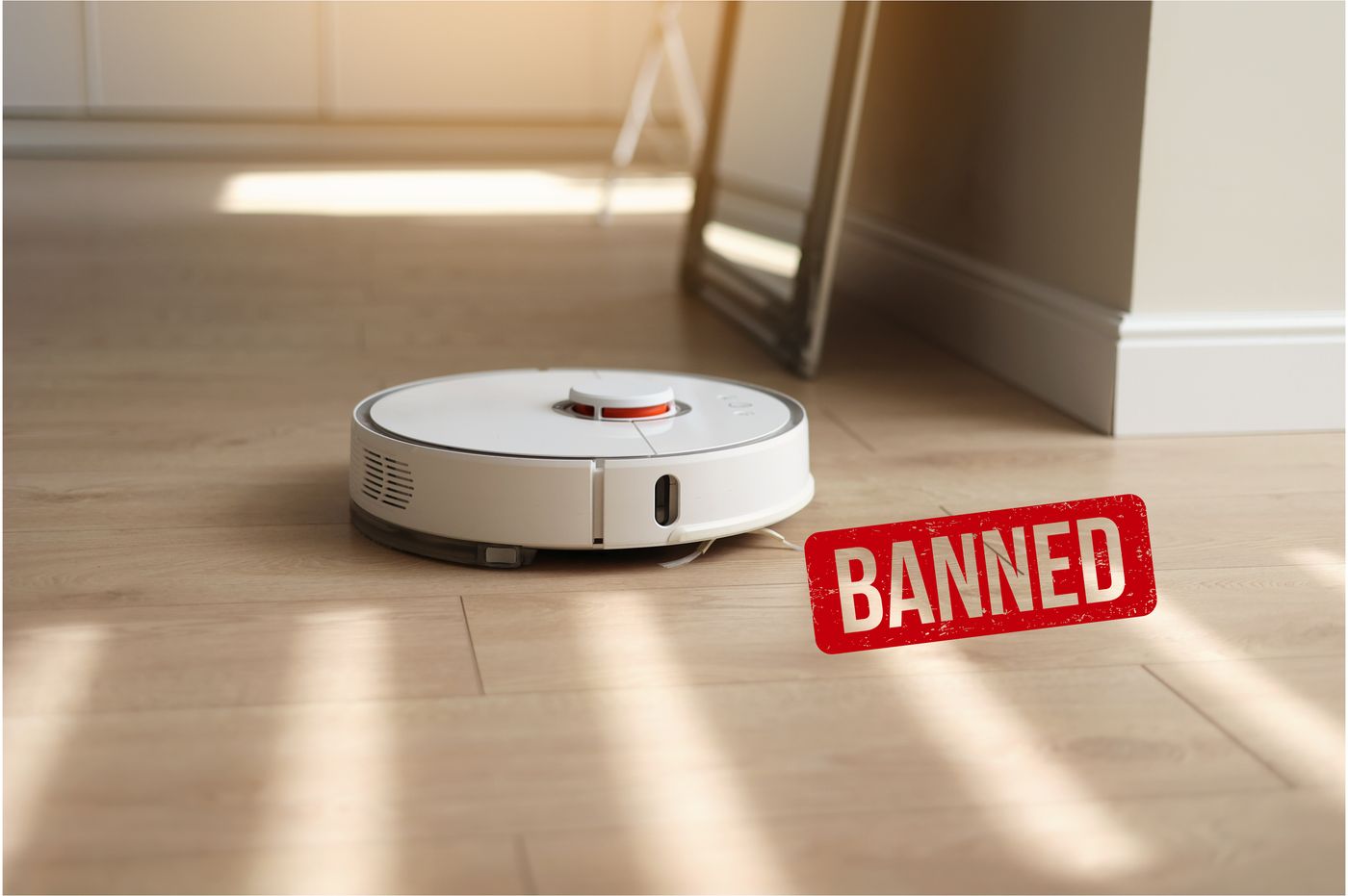
The Federal Communications Commission added foreign-produced advanced robotic devices to its Covered List on July 28, 2026, and confirmed to multiple outlets that robot vacuums are explicitly included in that category, effectively blocking new foreign-made robotic vacuum models from receiving the regulatory approval required to be sold in the United States. The decision covers devices that navigate autonomously, weigh more than 2 kilograms, and transmit radio signals, a definition that captures virtually every major robot vacuum brand on the market: Roborock, Ecovacs, Dreame, Narwal, and Xiaomi, which together held 68 percent of the global robotic vacuum market in 2025, are all affected. Even iRobot's Roomba lineup is caught by the ban, because Roomba is now owned by a Chinese company and has its devices manufactured in China and Vietnam. The ban also appears to extend to robotic lawnmowers, window cleaners, and pool scrubbers, though surgical robots, self-driving vehicles, wheelchairs, and fixed industrial robot arms are explicitly exempted. The FCC's rationale centers on national security and cybersecurity concerns, consistent with prior bans on foreign-made internet routers and telecom equipment.
If you already own a robot vacuum, nothing changes. The ban applies only to new models requiring fresh FCC approval, meaning existing approved devices remain on the market, replacement parts will still be available, and software updates will continue. The impact will become noticeable only as manufacturers roll out new generations and successor models: those will either be delayed, blocked entirely from the US market, or require companies to significantly shift their supply chains. The waiver threshold is extremely high: even devices designed and assembled in the United States must source 65 percent of their components domestically to qualify, a bar that virtually no robot vacuum maker currently clears. The one clear domestic beneficiary is Matic, a California-based startup that designs and assembles its robot vacuums in the United States and sells them for around $1,245, compared to the sub-$300 price point of most Chinese-made competitors. Consumer Reports noted that for anyone relying on a robot vacuum and looking to buy a new one, the selection of available models will shrink over time as existing inventory sells through and no new foreign-made replacements arrive to take their place.
Source:https://www.the-independent.com/tech/us-bans-robot-hoovers-b3024746.html