
A 6-Year-Old Looking For Rocks Pulled A Viking Sword Out Of The Ground.
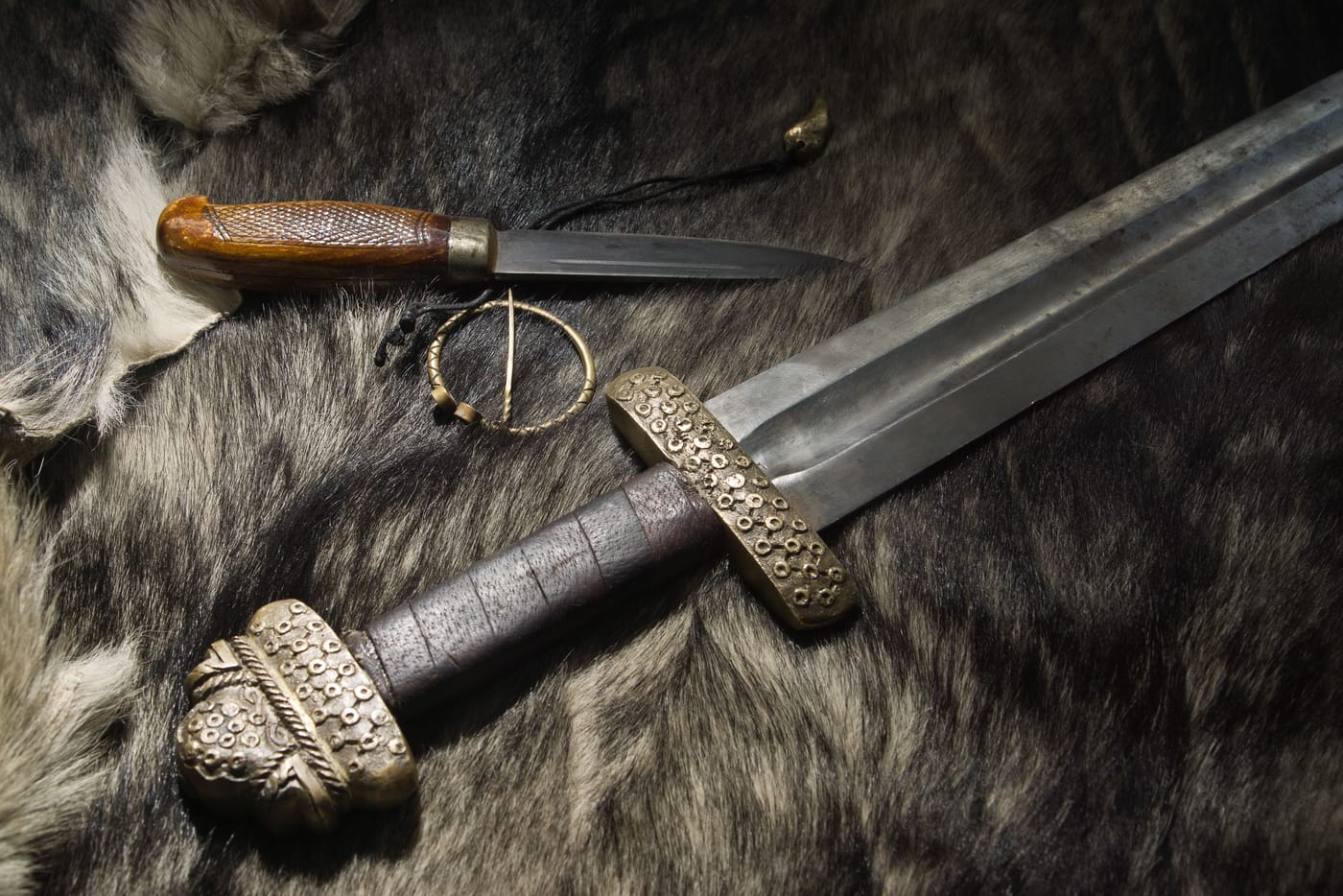
Henrik Refsnes Mørtvedt is six years old, attends Fredheim School in Norway, and was assigned to find rocks for an arts and crafts project when his first-grade class walked through a plowed field near Brandbu in Hadeland during a late April school trip. He spotted something metallic and rusty sticking out of the dirt, reached down, picked it up to see what it was, and pulled a roughly 1,200-year-old Viking sword from the soil. Henrik's first concern was practical: he worried a tractor might drive over it and puncture its tire. His second concern was historical: he told his teachers that the object should go to a museum rather than be left to decay in a field, though he acknowledged he had briefly been tempted to take it home. The teachers, recognizing they were looking at something significant, contacted county archaeologists, who examined the sword and confirmed it was a single-edged iron blade known as an enegget, a weapon type produced in Scandinavia during the late Merovingian period and early Viking Age, roughly 750 to 850 AD.
The blade is heavily rusted but well preserved in overall condition, with its shape clearly intact and the pommel and guard beneath their layer of corrosion matching a sword type identified in Jan Petersen's 1919 study of Norwegian Viking weapons. Archaeologist Øystein Lia told Fox News Digital that finds of this kind are relatively rare, occurring in the region only about once every two years, and that the sword likely belonged to someone of high status within Viking Age society, perhaps a male landowner and warrior who served as a military adviser to a local chieftain. The field where Henrik made his discovery sits in Hadeland, a region whose very name translates from old Norwegian as warrior land, and which has produced significant archaeological finds for generations. The sword is being preserved and studied at the Cultural History Museum in Oslo. Innlandet County archaeologists praised the children and teachers at Fredheim School for how they handled the discovery, and noted that Henrik's instinct that the object should go to a museum, formed before any adult had weighed in, was both correct and, coming from a six-year-old, genuinely remarkable.














