
The Story Of How Hot Air Balloons Were Invented Involves Trash And A Very Confused Sheep
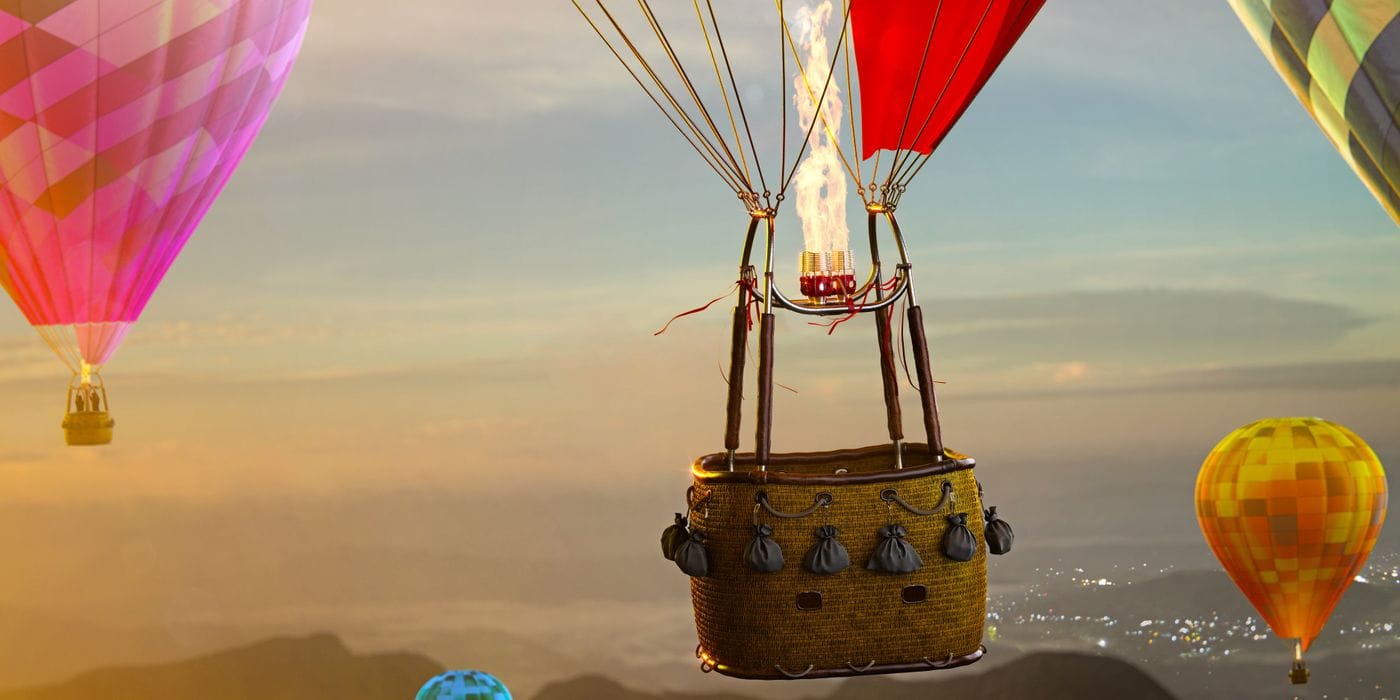
The story of how humanity first left the ground begins not with a scientist in a laboratory but with two brothers in a paper factory in southern France, a bonfire of damp straw and old shoes, and a sheep named Montauciel, which translates from French as Climb-to-the-Sky. Joseph and Étienne Montgolfier were paper manufacturers from Annonay, fascinated by the scientific revolution unfolding around them, and in 1782 Joseph made a peculiar observation: a piece of fabric held over a fire appeared to billow upward as though it wanted to leave. The brothers began experimenting, building small fabric boxes over open flames and watching them rise, and convinced themselves they had discovered a mysterious new gas they called Montgolfier Gas that possessed the property of levity and could lift objects into the air. They had not discovered a new gas. The air inside the box was simply hot, and therefore less dense, and physics was doing the rest. This misunderstanding would become one of the great happy accidents in the history of invention, because their commitment to burning increasingly strange and pungent combinations of fuel, including damp straw, wool, old shoes, and at certain points what accounts describe as spoiled meat, kept producing spectacular results even if they could not explain why.
By September 1783 the brothers were ready to demonstrate their invention at Versailles before King Louis XVI and Marie Antoinette, who was driven back from the bonfire by the smell before the flight could begin. A cage was attached beneath the balloon containing three animals selected with scientific precision: a sheep, because its physiology resembled a human's closely enough to serve as a meaningful test subject; a duck, which was already known to fly at high altitudes and would act as a biological control; and a rooster, a bird that flies but not very high, to provide a comparative middle case. The balloon rose to approximately 520 metres and flew for eight minutes before landing in a wood two miles away. When the young scientist Jean-François Pilâtre de Rozier arrived at the landing site, he found the cage broken open and empty, and he braced for the worst. He then found the sheep quietly grazing in the nearby grass. The duck and rooster were also recovered. The only injury was a broken wing on the rooster, which the sheep had apparently kicked during the flight. Less than two months later, on November 21, 1783, de Rozier and the Marquis d'Arlandes became the first humans to fly freely in the air, traveling 8 kilometres over Paris in 25 minutes while Benjamin Franklin watched from the crowd below and wrote in his journal that he could not help feeling a certain mixture of awe and admiration.














