
NASA's Rover 'Ran' A Marathon On Mars Five Years After Landing...
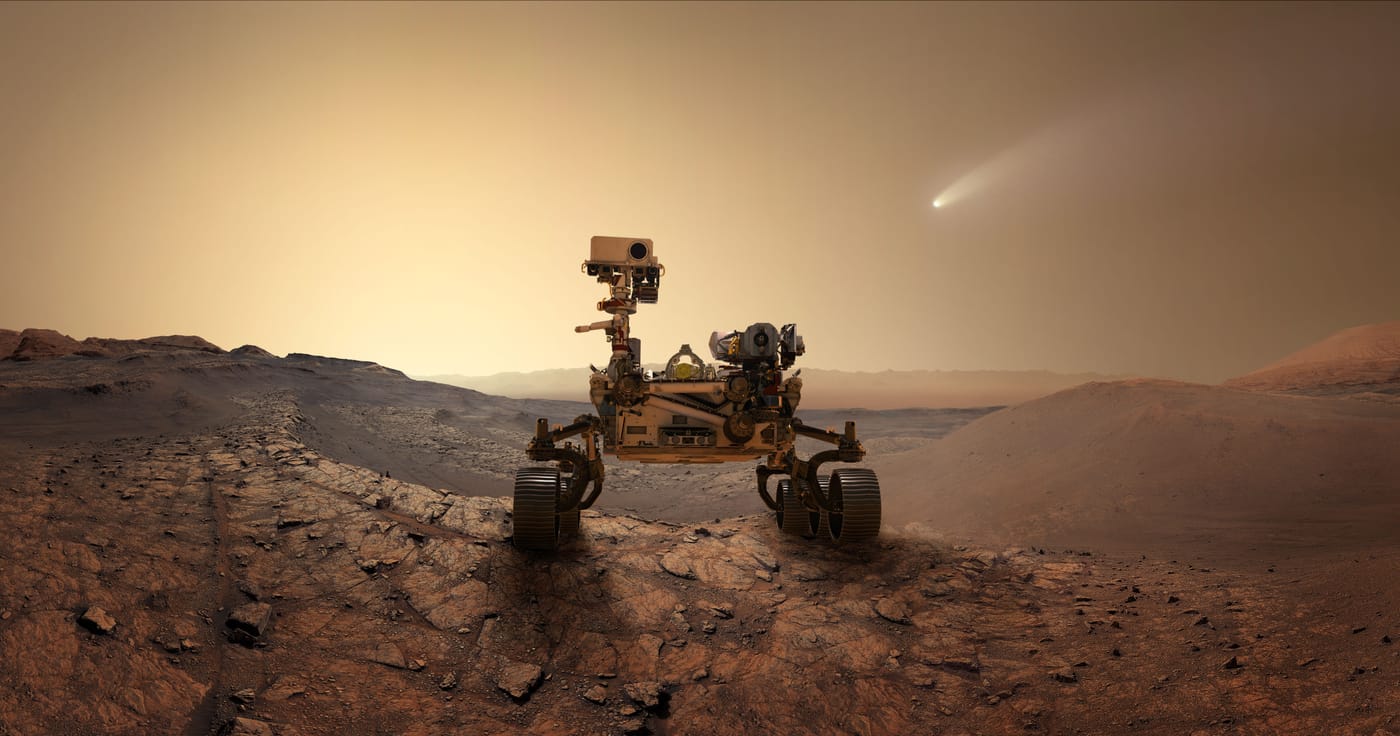
NASA's Perseverance rover has now traveled more than 26.2 miles across the surface of Mars, completing the equivalent of a full marathon more than five years after landing in Jezero Crater in February 2021, making it only the second rover in history to reach that distance on another planet. Perseverance crossed the milestone while exploring ancient terrain to the west of Jezero Crater, a region the science team has described as one of the most geologically valuable areas the mission has visited, with rocks that may predate the crater itself and offer clues to conditions on Mars billions of years before any life could have existed. The only other rover to complete a marathon on the Red Planet was Opportunity, which covered the same distance but took over 11 years to do it. More than 90 percent of Perseverance's journey has been driven autonomously, using terrain-mapping algorithms and hazard-avoidance software that allow the rover to navigate without real-time human input, a capability that enabled the mission to cover ground far faster than its predecessors. NASA JPL confirmed the milestone on social media with a characteristic understatement: it's a Martian marathon.
The rover's mission was originally planned to last one Martian year, roughly 687 Earth days, but Perseverance's power source, a radioisotope thermoelectric generator, is rated for well over a decade of operation, and engineers have confirmed the vehicle is in excellent health with its drive systems certified for at least 60 more kilometers of travel. At its current pace, Perseverance is on track to eventually surpass Opportunity's all-time distance record of 28.06 miles, which stood for more than two decades before Perseverance arrived. Among Perseverance's most significant scientific contributions have been the collection of rock samples that show possible biosignatures, including a sedimentary sample from inside Jezero Crater described as containing potential signs of ancient microbial life, a finding that cannot be definitively analyzed until the samples are returned to Earth by a future mission. The acting project manager at JPL, Steve Lee, said at the five-year mark that the team has always known this mission was a marathon and not a sprint, and that the rover continues to prove it right in the most literal way possible.














