
Neanderthals Were Going To The Dentist 59,000 Years Ago
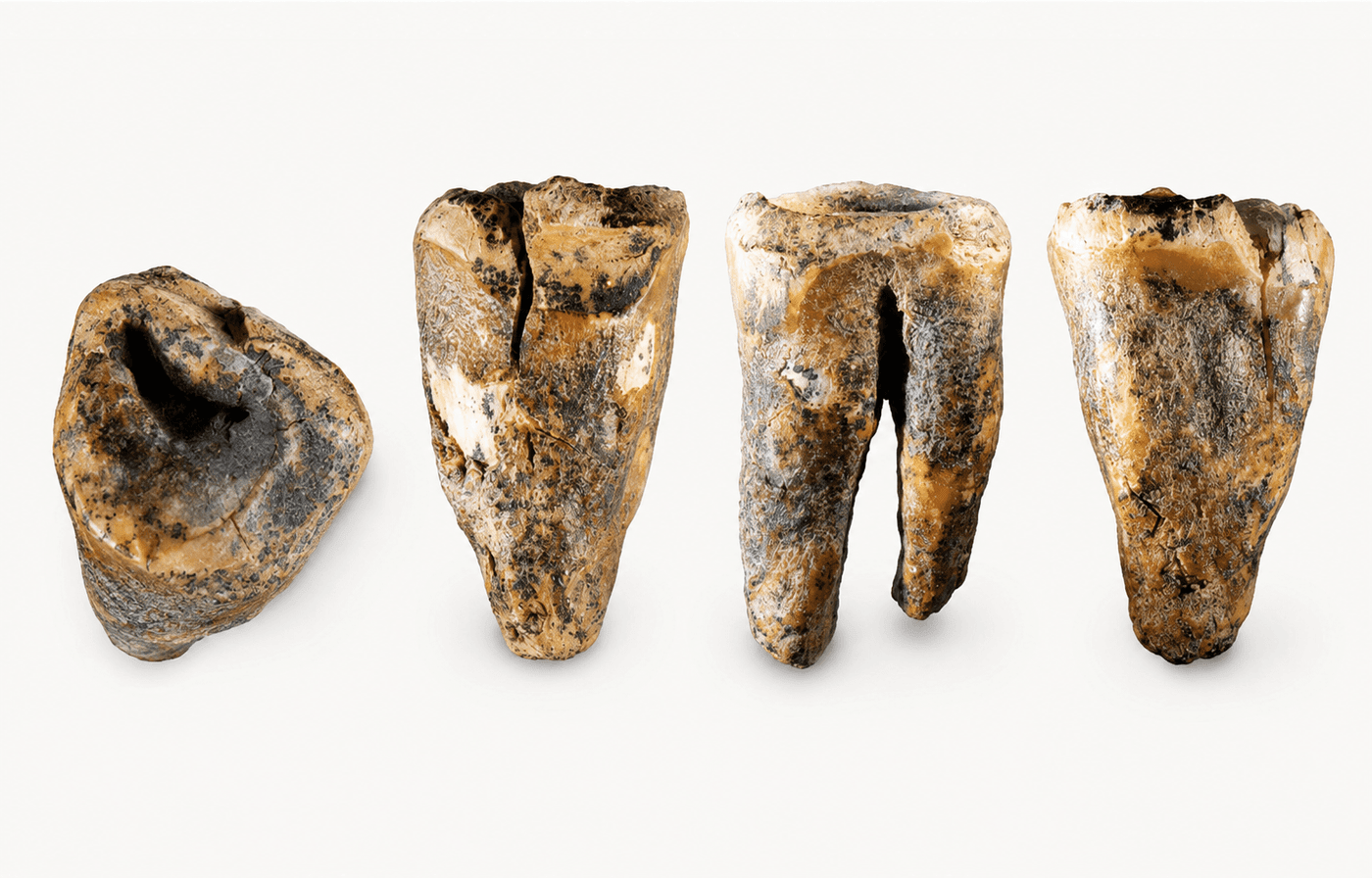
A single tooth pulled from a cave in the Altai Mountains of southwestern Siberia has just rewritten the history of dentistry, pushing the earliest known evidence of dental treatment back by more than 45,000 years. The tooth, a Neanderthal molar recovered from Chagyrskaya Cave and dated to roughly 59,000 years ago, has a deep hole at its center that extends all the way down to the pulp cavity. Researchers initially assumed the damage was natural, but close examination with micro-CT scans and electron microscopy revealed something far more remarkable: the hole was lined with dozens of tiny radial grooves, the kind that can only be produced by deliberate rotational drilling. When scientists recreated the procedure using jasper stone tools, the same raw material available at the cave, they were able to produce an identical hole in a modern human tooth in under an hour.
The study, published in the journal PLOS One by researchers from the Russian and Uzbekistan Academies of Sciences, describes the discovery as the oldest known evidence of invasive dental care in the entire history of our genus, and the first such case ever documented outside of modern humans. The lead researcher described the tooth as showing that a Neanderthal identified a painful infection, understood that removing the decayed tissue would help, and had the motor skill and patience to carry out the procedure. A co-author of the study told National Geographic that discoveries like this one drive the final nails into the old caricature of Neanderthals as simple brutes less capable than early humans. Scientists have been steadily building a picture of Neanderthals as people who used medicinal plants, buried their dead, and cared for their injured, and a 59,000-year-old root canal fits that picture exactly.
Source:https://www.earth.com/news/neanderthal-dentists-treated-cavities-with-stone-tools-59000-years-ago/














