
Two Weeks Of Mirror Play Changes How A Baby's Brain Works.
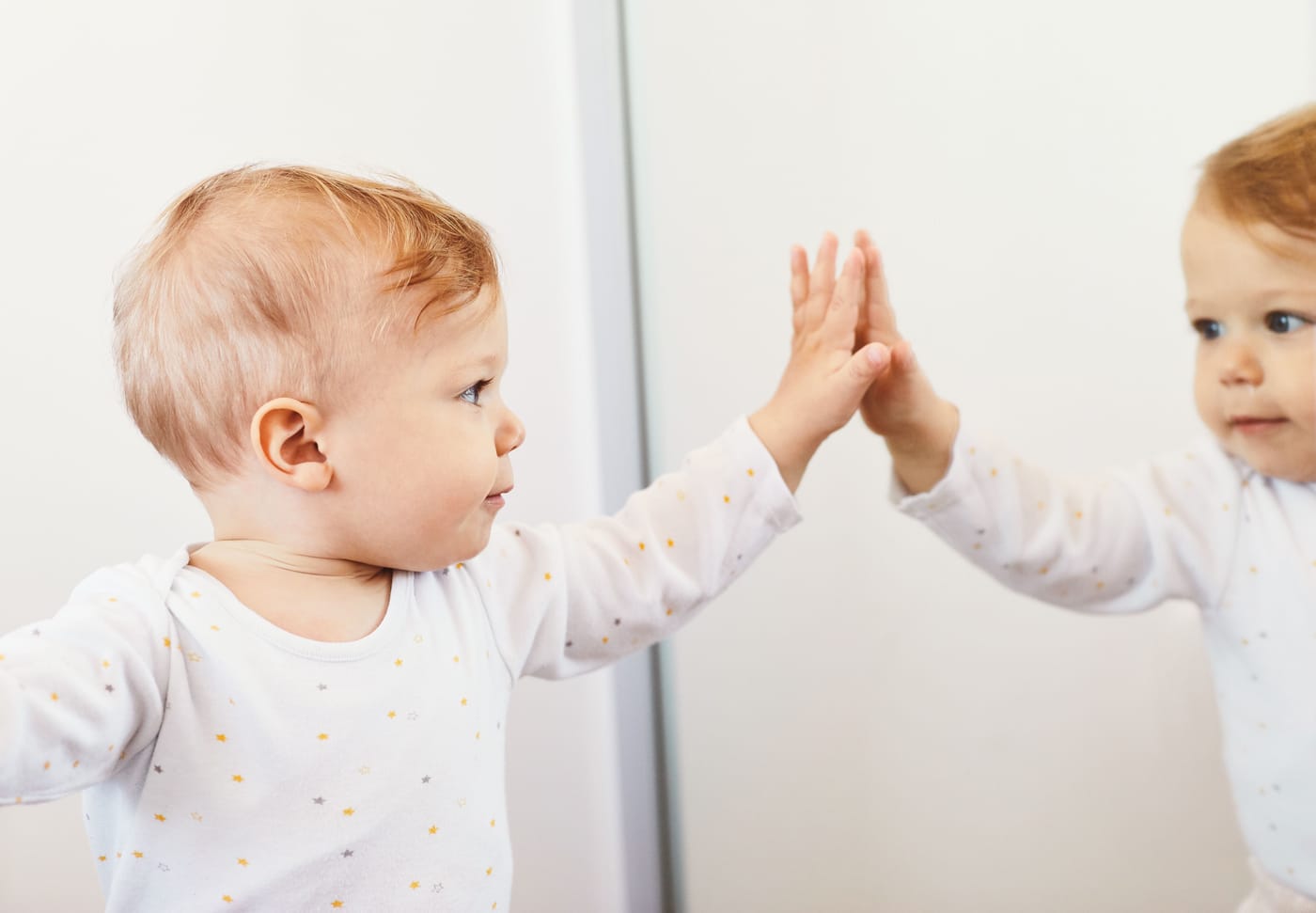
Parents who position a small mirror near their baby's play area are doing something that looks like a charming distraction and may actually be shaping how the infant's brain learns to understand other people. A new study published in the journal Developmental Science by researchers at the University of Birmingham found that just two weeks of daily mirror play measurably changed brain activity in four-month-old babies, specifically in the sensorimotor cortex, the region involved in understanding and mimicking the movements and facial expressions of other people. The finding adds to a growing body of evidence that the social brain begins developing far earlier than previously understood, and that the specific experiences a baby has in the first months of life play a more active role in wiring that development than scientists had assumed. The research team divided infants into two groups: one used a small toy with an embedded mirror every day for two weeks, while the other group used the same toy without access to the mirror. Before and after the two-week period, researchers recorded brain activity using EEG and facial muscle responses using EMG while the babies watched videos of other infants making facial expressions.
What the team found was that infants in the mirror group showed significantly enhanced activation in the sensorimotor cortex when watching other babies' faces, compared to both their own baseline before the study and to the infants who had used the same toy without a mirror. This region of the brain is associated with the neural matching mechanism that allows people to couple what they see in someone else's face with a corresponding internal motor response, the biological foundation of facial mimicry, empathy, and social attunement. Interestingly, the enhanced brain activation did not translate into a measurable increase in visible facial mimicry during the experiment itself, suggesting that the neural changes may represent a deeper readiness to socially engage that has not yet fully expressed itself in outward behavior. The lead researchers said the results suggest that everyday sensorimotor experiences, including something as simple as watching your own face move in a mirror, help build the neural architecture for social understanding earlier than anyone had measured, and that parents who offer babies mirrors to look at may be giving their developing social brains more than they realized.
Source:https://www.earth.com/news/looking-in-a-mirror-may-help-babies-understand-other-people/














