Angelina Jolie's Foundation Has Quietly Protected A Cambodian Forest For 20 Years
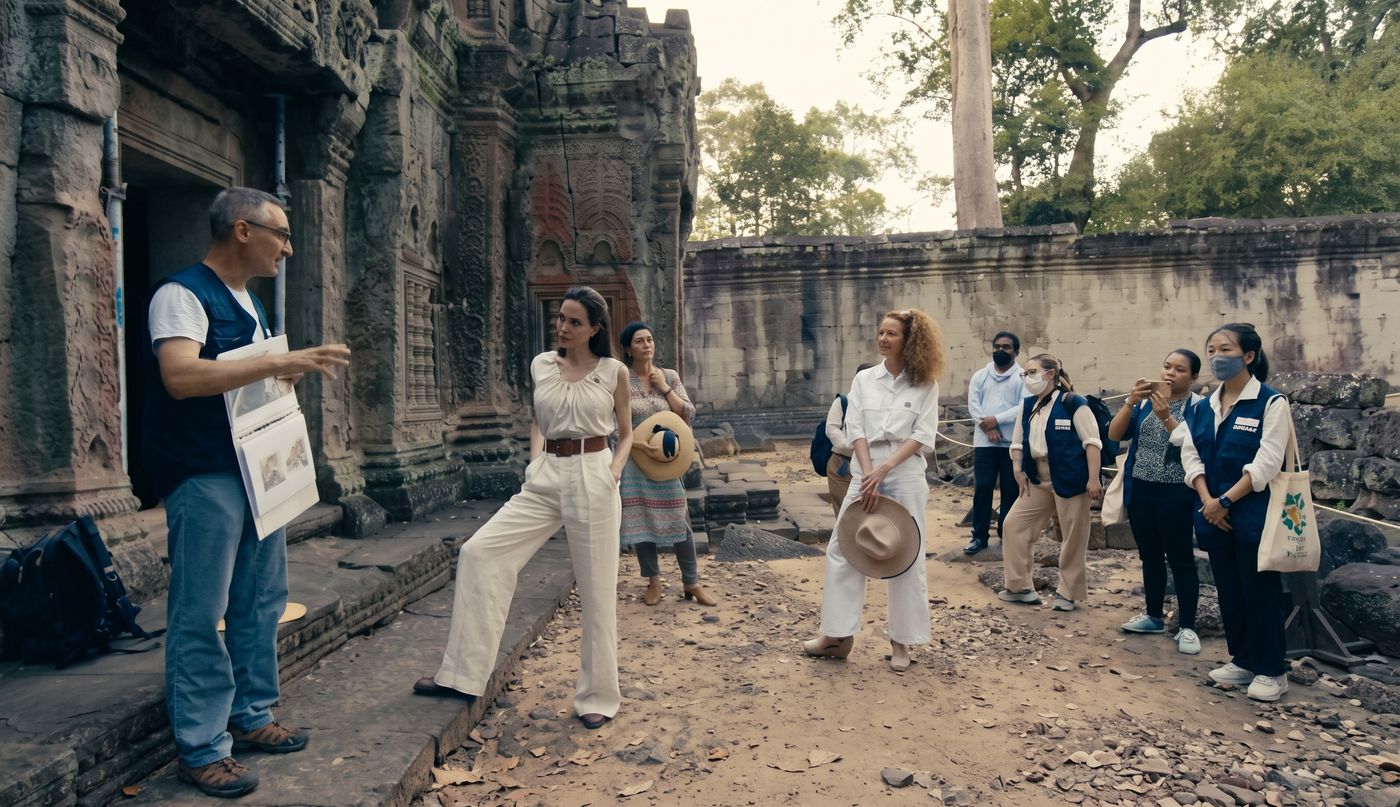
The Maddox Jolie-Pitt Foundation, named for Angelina Jolie's son whom she adopted from Cambodia after falling in love with the country while filming Lara Croft: Tomb Raider, has been working in the Samlaut Multiple Use Area in northwestern Cambodia since 2006. The protected zone covers 150,720 acres of forest across parts of Battambang and Pailin provinces near the Thai border, and is home to wildlife that conservation groups describe as among the most significant remaining in the northwest of the country. A biodiversity survey commissioned by the foundation and conducted by Fauna and Flora International between 2021 and 2022 documented 44 species on camera traps, including 10 independent records of endangered Asian elephants, four records of critically endangered Sunda pangolins, and three records of dholes, the rare wild dogs of Asian forests. The bird survey counted 142 species. The foundation's rangers cleared approximately 7,800 meters of wire snare
s from the forest in 2025, roughly 4.8 miles of illegal traps removed in a single year by local residents trained and employed by the organization. Those rangers, who the foundation began training in 2006, became government officials under Cambodia's Ministry of Environment in 2016 and now operate from a headquarters in Samlout that has been the base of the patrol unit since 2018.
The foundation started with a different mission entirely. Cambodia is one of the most heavily landmined countries in the world, a legacy of decades of conflict that culminated in the Khmer Rouge era, and Samlaut was that movement's first and last stronghold. The foundation's history says it began with one aim: to work alongside local communities to clear the most heavily mined land in Cambodia. Once that land was safe, the work expanded into environmental conservation, livelihood programs, and building clinics and schools for the approximately 57,000 people who live in Samlaut. The beekeeping program, launched in 2019, produced 1,392 liters of honey in 2025, with a deliberate emphasis on putting the work in the hands of women, who have been encouraged to join since the program's first year. Local beekeepers describe what the program offers as something rare: an income that depends on the forest staying intact, which means the people earning from the bees have a direct financial interest in protecting the trees the bees need. Between 71 and 94 percent of replanted tree seedlings across five reforestation sites in the Sangker River Basin survived to the following year, measured by the foundation with independent verifiers. Its summary of the approach is one line: restoration measured not by how many trees go in the ground, but by how many are still standing the following year. Jolie adopted Maddox in 2002. The foundation carrying his name has been doing this work for two decades, mostly quietly, in one of the last remnants of forest in northwestern Cambodia.