Astronomers Found The First Green Star Ever Recorded
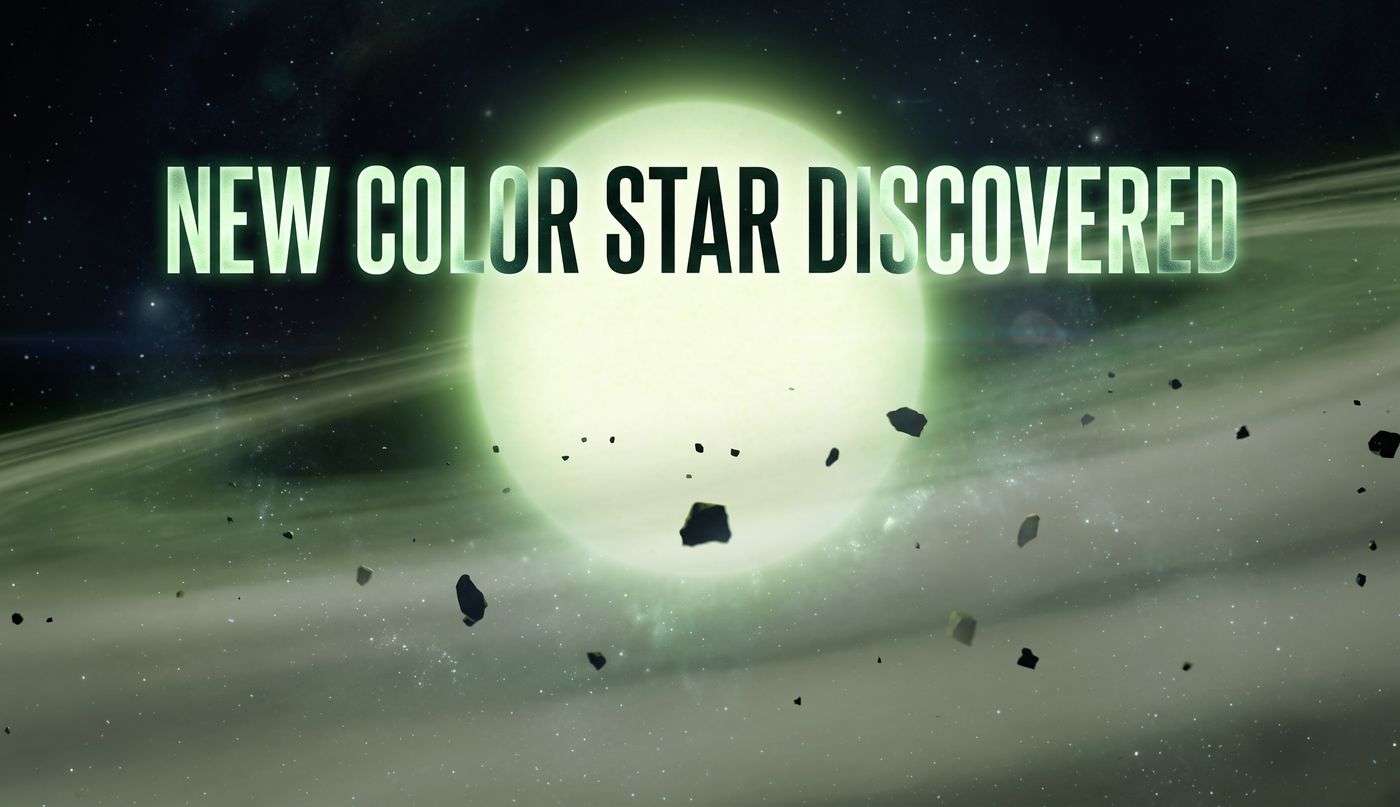
Astronomers at the University of Warwick have discovered what they describe as a hidden rainbow of dead stars, including the first star ever recorded that would appear genuinely green to the human eye, in research that fundamentally changes what scientists thought was possible in the color of the universe's stellar objects. The green star, designated WDJ1330+6435, is a white dwarf, the dense remnant left behind when a star like our sun exhausts its nuclear fuel and collapses. White dwarfs were previously understood to glow in whites and yellows depending on their temperature and atmospheric composition. The Warwick team found that unusual chemical interactions in the extremely dense atmospheres of certain white dwarfs can produce light in colors nobody had previously thought achievable in natural stellar objects, including pink, purple, yellow, cyan, and now the world's first confirmed green. In the case of WDJ1330+6435, the green appearance comes from sodium absorbed into the star's atmosphere from rocky planetary material. The immense atmospheric density of the white dwarf causes sodium to absorb light across a broad range of yellow, orange, and red wavelengths, leaving the ghostly green of the remaining spectrum as the dominant color the star emits.
The research required the team to sort through large datasets of known white dwarf observations and identify anomalies where the recorded colors simply did not match the established models for what colors those stars should be. Finding pink, purple, and cyan white dwarfs alongside the green one suggests the phenomenon is more common than the existing catalog of stellar colors had indicated, hidden in the data but waiting for someone to look specifically for it. The mechanism behind each color variation differs: some involve calcium, magnesium, or other elements accreted from planetary debris; others involve temperature gradients or stratification in the stellar atmosphere that produce unexpected spectral signatures. The lead researcher described the experience of finding genuinely colored dead stars as feeling like something out of science fiction, a reaction that is hard to argue with when the phenomenon being described is a green star that has been sitting in observation archives without anyone recognizing what they were looking at. White dwarfs are the eventual fate of approximately 97 percent of all stars in the Milky Way, including our own sun, making this discovery not just a novelty but a window into what the late stages of stellar life can actually look like, in far more color than anyone previously expected.
Source:https://www.sciencedaily.com/releases/2026/10/261017230018.htm