This Jellyfish Is Immortal And Could Save Us
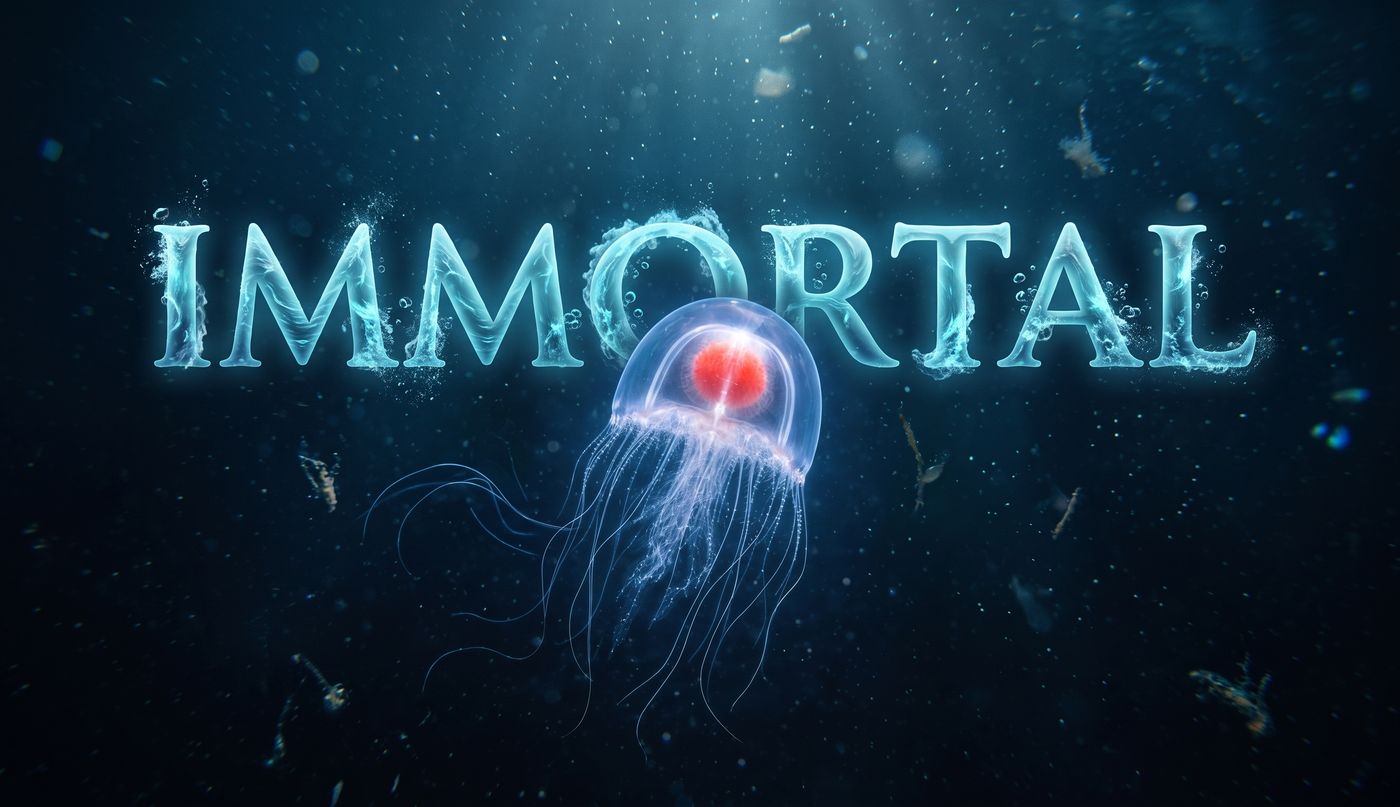
Turritopsis dohrnii is a jellyfish about 4.5 millimetres wide — smaller than the nail on your little finger — and it may be biologically immortal. When the adult jellyfish experiences stress, starvation, or physical damage, instead of dying it reverses its own life cycle, reabsorbing its tentacles, sinking to the seafloor, and transforming back into a juvenile polyp — its earlier life stage — from which it matures into a full adult again. The closest analogy is a butterfly that, rather than dying, could transform itself back into a caterpillar and start the whole process again, and it can do this indefinitely. In perfect conditions, it may never die of old age at all. The process is called transdifferentiation — the reprogramming of specialized adult cells back into specialized juvenile cells, a feat considered extraordinarily rare in nature. It was first accidentally observed in the 1980s when students returned to find a jar full of polyps where adult jellyfish had been, and nobody could explain it.
The animal is tiny, translucent, and largely overlooked for decades, but has now been found in oceans worldwide, almost certainly spread by ships whose ballast water carries the jellyfish across ocean crossings — journeys it survives by reverting to its juvenile form under stress. Japanese scientist Shin Kubota has kept captive populations since the 1990s, caring for them daily and slicing their microscopic food under a microscope, and has documented colonies naturally rejuvenating up to ten times over two years, sometimes monthly. The BBC and the Natural History Museum have both published extensive features this week examining what understanding this jellyfish could eventually mean for human aging research. Nobody is claiming immortality yet. But a 4.5-millimetre animal in a jar in Japan may have more to teach us about life than almost anything else on the planet.
Source:https://www.nhm.ac.uk/discover/immortal-jellyfish-secret-to-cheating-death.html