
Scientists Found A Hidden Regenerative Switch In The Human Body.
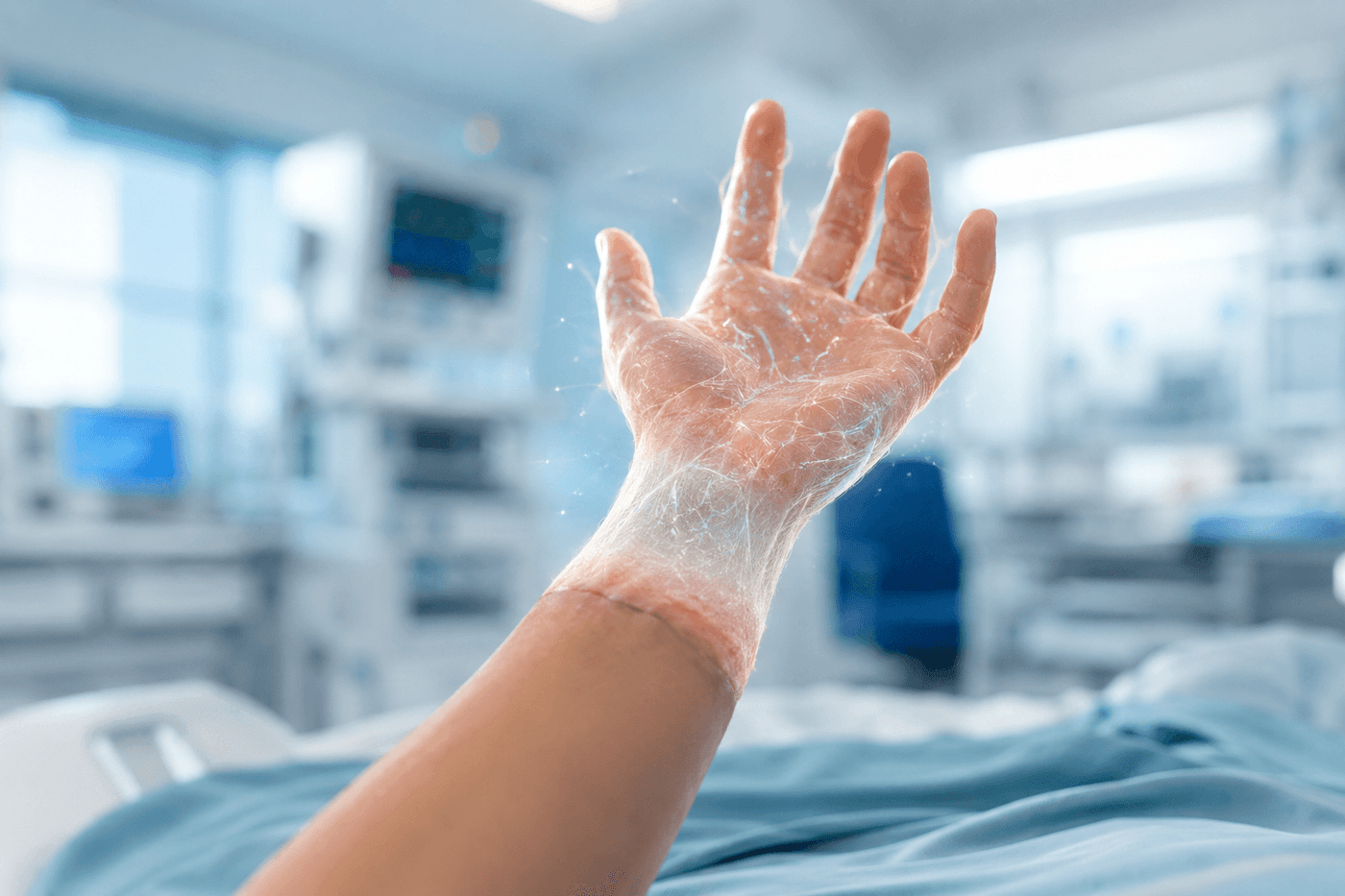
For generations, one of the most accepted limits of human biology has been the inability to regrow lost body parts. Salamanders and certain other animals can regenerate entire limbs, but mammals, including humans, close wounds with scar tissue and stop there. New research from Texas A&M University's College of Veterinary Medicine and Biomedical Sciences, published in Nature Communications, suggests that this limitation may not be permanent, and may not even be real in the way scientists assumed. The study found that the ability to regenerate complex tissue may not be absent in mammals at all, but rather switched off, waiting for the right biological signals to be activated. Using a two-stage treatment on animal models, the research team successfully redirected the body's normal healing response away from scar formation and toward genuine regrowth, restoring bone, joint structures, ligaments, and tendons after amputation. The lead researcher, Dr. Ken Muneoka, who has spent his career studying why some animals can regenerate and others cannot, said the question has been asked since Aristotle and that this study is the closest anyone has come to an answer that opens a door.
The treatment works in two steps that interrupt and redirect the body's default healing pathway. When mammals are injured, cells called fibroblasts typically form a blastema-like structure that would enable regeneration but instead default to producing scar tissue, a faster response that prevents infection but closes off the possibility of rebuilding what was lost. The team's approach waits until the initial wound has healed over, then applies a growth factor called FGF2 that encourages the formation of a genuine blastema-like structure, the same kind of cellular scaffolding that allows salamanders to regenerate. A second growth factor, BMP2, is then applied to give those cells the signals they need to begin building new tissue rather than scar. One of the study's most significant findings is that this process does not require introducing stem cells from outside the body, because the cells needed for regeneration are already present in the wound. Muneoka said you do not have to get stem cells and put them back in because they are already there, and what the research identified is how to get them to behave the way you want. The regrown tissues were not perfect replicas of the originals, and human applications are still years away, but the team believes the approach could meaningfully reduce scarring and improve outcomes after amputations, and that what they have found fundamentally changes how scientists should think about the regenerative limits of the human body.
Source:https://www.sciencedaily.com/releases/2026/06/260617032207.htm














