Bees Have A Built-In Magnetic Compass And Scientists Are Just Finding Out How Common It Is
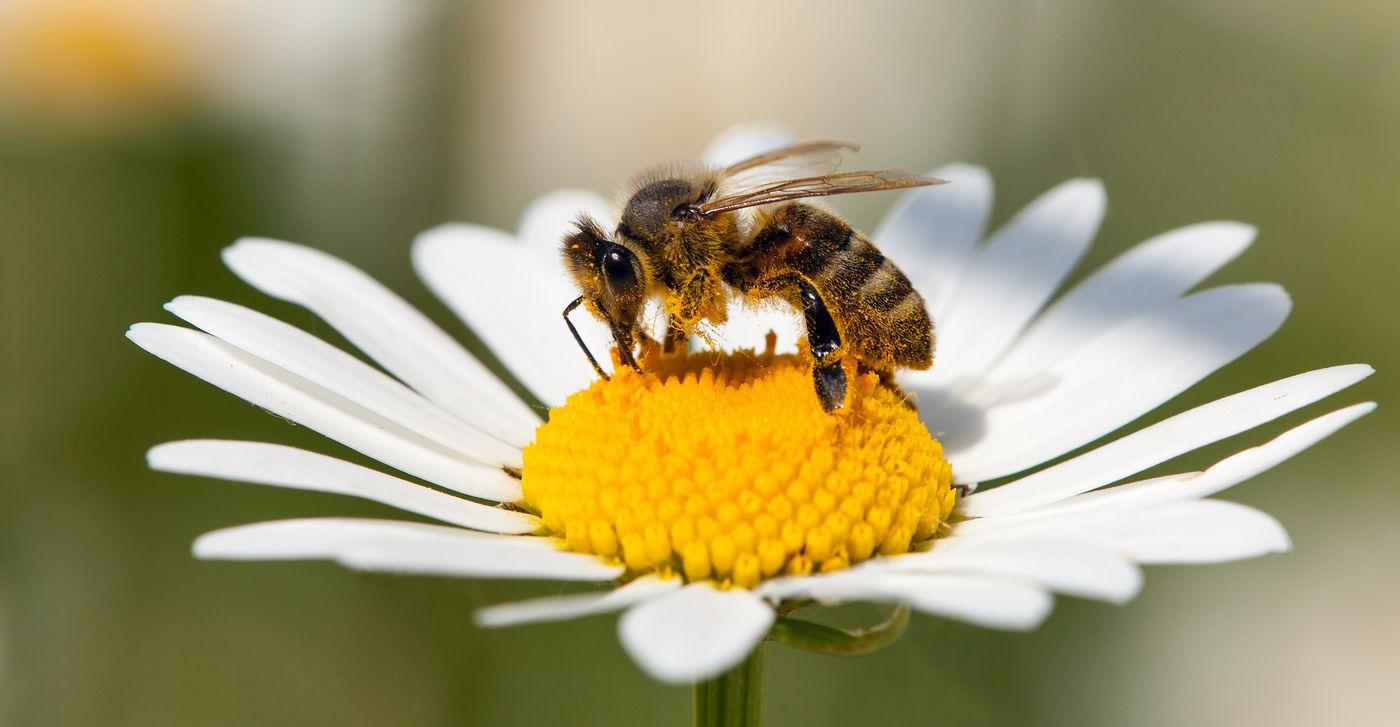
Researchers at the University of Tennessee have published findings in the journal Science Advances showing that 74 out of 96 bee species they tested carry tiny iron-based magnetic particles in their bodies, a discovery that challenges decades of assumptions about which bees have an internal compass and why. Scientists had long known that honeybees exhibit a sense called magnetoreception, the ability to detect and navigate using the Earth's magnetic field, and the prevailing assumption was that this ability was tied to their social lifestyle: honeybees communicate the location of flowers to their hivemates through a waggle dance that incorporates directional information relative to the geomagnetic field. The expectation, therefore, was that solitary bees, who have no hivemates to communicate with, would not need or carry the same magnetic sensitivity. The study's lead author, Laura Russo, described what happened when the team tested that assumption: they found strong magnetic responses in both social and solitary species, in cavity-nesting and ground-nesting bees, and even in nocturnal bee species, forcing them to reject their original hypothesis almost immediately.
The research method involved collecting bee specimens from across the Apidae family tree, grinding dried specimens into powder, and measuring the magnetic response of that powder using a vibrating-sample magnetometer. The team found that larger bees tended to produce stronger magnetic responses, and social bees were generally more magnetic than solitary ones, but the key finding was the breadth of the distribution: magnetism appeared across all bee families tested, regardless of lifestyle or nesting behavior. Even more surprising, when the team broadened the study to include beetles, wasps, and flies for comparison, those insects also showed magnetic properties, suggesting the ability predates the evolutionary origin of bees entirely and may be an ancient trait conserved across a wide range of insect lineages. Russo was careful to note that demonstrating magnetic properties in a ground-up specimen is not the same as proving a live bee uses magnetoreception to navigate, and that the mechanism behind the ability remains unclear. The study does not fully explain the function of the magnetic particles or how they interact with the nervous system. What it does establish is that the internal compass most scientists thought was a specialized adaptation of social honeybees is, in fact, almost everywhere in the bee world, waiting quietly to be understood.
Source:https://www.goodgoodgood.co/articles/bees-with-magnetic-particles-internal-compass