Conservationists Are Racing To Save This Baseball Bat-Sized Squirrel
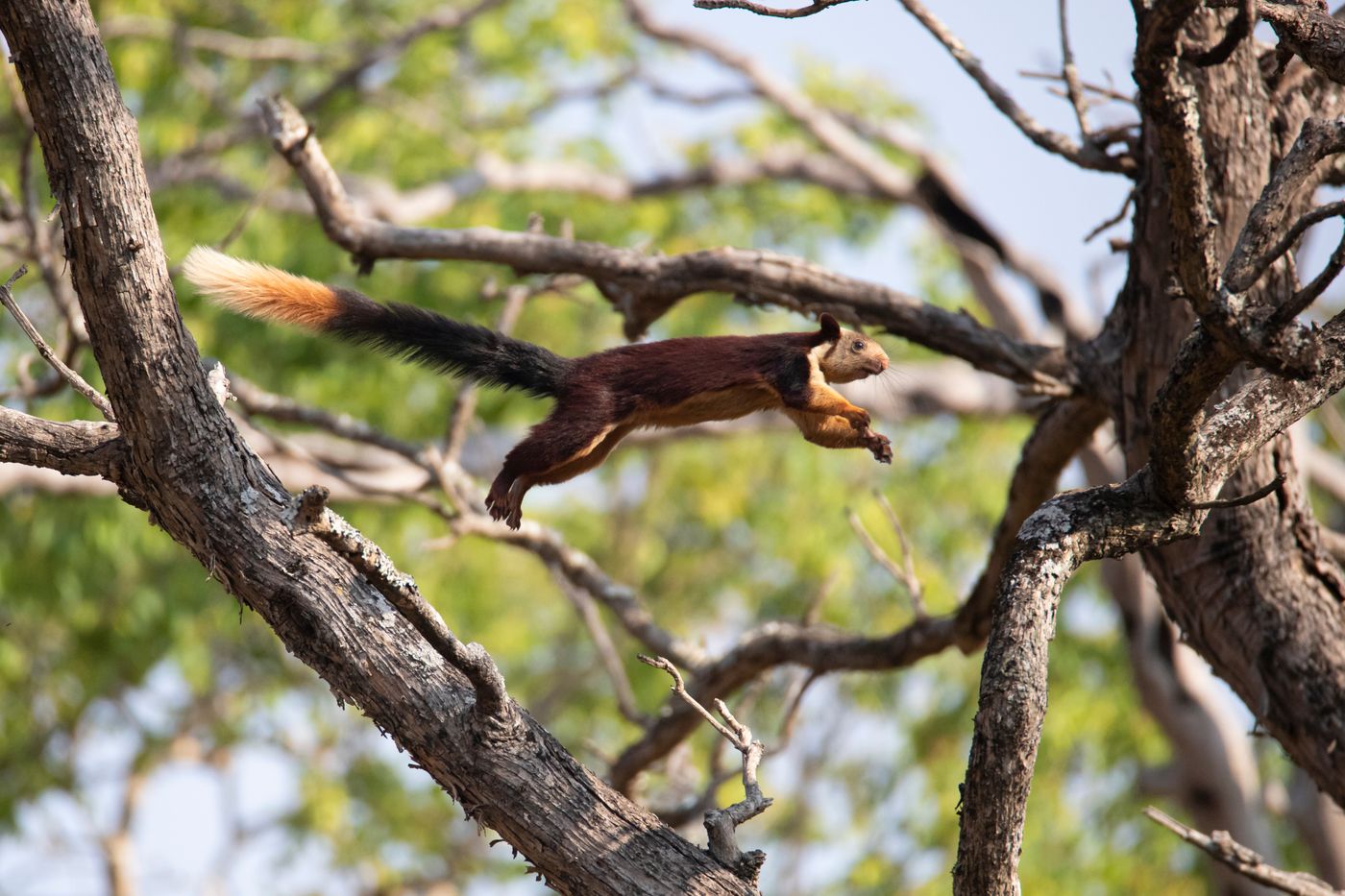
In the dense forest canopies of Cambodia, Vietnam, and Myanmar lives a squirrel that most North Americans have never seen or heard of, and almost certainly would not recognize as a squirrel at first glance. The black giant squirrel, named for its striking black-and-tan coat, averages about 32 inches in length from head to tail, which is roughly the same size as a standard baseball bat, making it the largest squirrel in Nepal and one of the largest in the world. It spends its life in the upper canopy of undisturbed tropical forest, leaping between high branches where ground predators cannot easily reach it, and it has a strong biological preference for untouched forest, avoiding human settlements and agricultural land entirely. That preference is also what makes it vulnerable: every patch of forest cleared for logging or farming is another stretch of territory the black giant squirrel cannot use. The species is currently listed as near threatened on the IUCN Red List, one category away from vulnerable, which would mark the beginning of a more urgent conservation status.
Flora and Fauna, a conservation nonprofit backed for more than six decades by Sir David Attenborough, has made the black giant squirrel a target species in its Southeast Asian programs, equipping local forest rangers in Cambodia, Vietnam, and Myanmar with the resources, training, and equipment they need to monitor populations and actively prevent poaching and illegal logging in key habitat areas. The organization notes that because these squirrels live almost exclusively in undisturbed forest, habitat destruction is the primary threat they face, and that protecting the forest protects the squirrel by default, but only if rangers are adequately supported in the field. Flora and Fauna also runs longer-term programs to reduce the economic pressures that drive destructive logging in the first place, helping local communities develop income from sustainable forest harvesting and locally led ecotourism so that intact forest becomes a livelihood rather than an obstacle. One complication the conservation effort faces is that black giant squirrels are sometimes mistaken for Asian palm civets, which are known locally as fruit tree raiders and are frequently targeted by farmers, putting the squirrels at risk of being shot on sight by people who believe they are protecting their crops. Community education and direct outreach are part of the program for exactly that reason.
Source:https://www.goodgoodgood.co/articles/giant-black-squirrel-conservation-animals