Male Sperm Whales Make The Loudest Sound Of Any Mammal On Earth And Nobody Knows What They're Saying
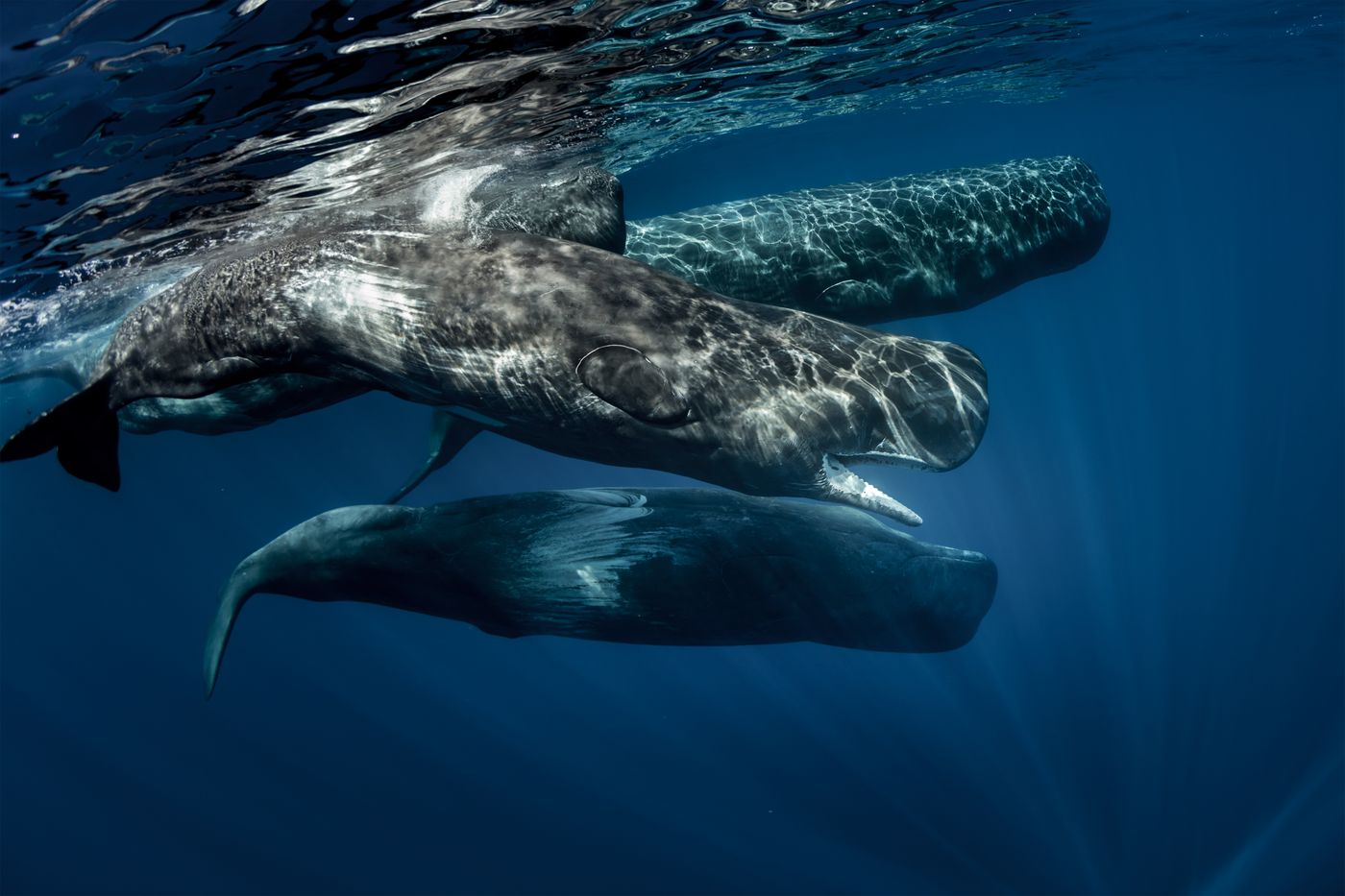
A study published in the Annals of the New York Academy of Sciences has confirmed that male sperm whales produce the loudest communication sounds of any mammal on Earth, a type of click called a slow click that can be heard by another whale up to 43 miles, or 70 kilometres, away underwater. Researchers from Aarhus University, New College of Florida, the University of Bristol, and the Scottish Association for Marine Science analyzed slow clicks recorded off the Seychelles, Sri Lanka, Norway, and Scotland, and found that only male sperm whales produce them. What makes the clicks remarkable is not just their volume but the combination of three qualities happening simultaneously: extreme loudness, wide spacing between beats, and extraordinary range. The clicks come five to ten seconds apart, and the whales maintain that spacing with the kind of precision a drummer holds at an extremely slow tempo. The research team said it was the combination of strength, rhythm, and range that they found so extreme, and so different from anything else documented in mammalian communication. As far as anyone can tell, the clicks have nothing to do with hunting. They exist to be heard. What they mean remains an open question.
The mechanism behind the sound is extraordinary in its own right. Male sperm whales carry the largest sound-producing organ of any animal on Earth, a nasal complex that can weigh more than 11,000 pounds and takes up roughly a third of the animal's body length. Inside it sit structures the size of car tires called phonic lips, which the whale snaps together to produce a click. Professor Peter Teglberg Madsen of Aarhus University noted that a larger nose produces a lower-frequency click, which means the sound may function as what biologists call an honest signal, a way for a male sperm whale to communicate his size to every other whale in earshot without either of them getting any closer. The research team has also proposed a fascinating answer to how the whales maintain such precise intervals between clicks: when a whale fires a click straight down, the sound bounces off the seabed and returns as an echo seconds later. The whale may use that returning echo as its cue to fire the next one, effectively using the ocean floor as a stopwatch. The team plans to confirm this with playback experiments, attaching recording devices to whales and playing slow clicks back through underwater speakers to see how they respond. Nobody yet knows whether a listening whale swims closer, swims away, or clicks back. The experiment, whenever it happens, will be one of the more remarkable conversations in the history of animal research.