Scientists Gave Monkeys A Reward-Free Video Game And They Played Nearly 100 Rounds Anyway
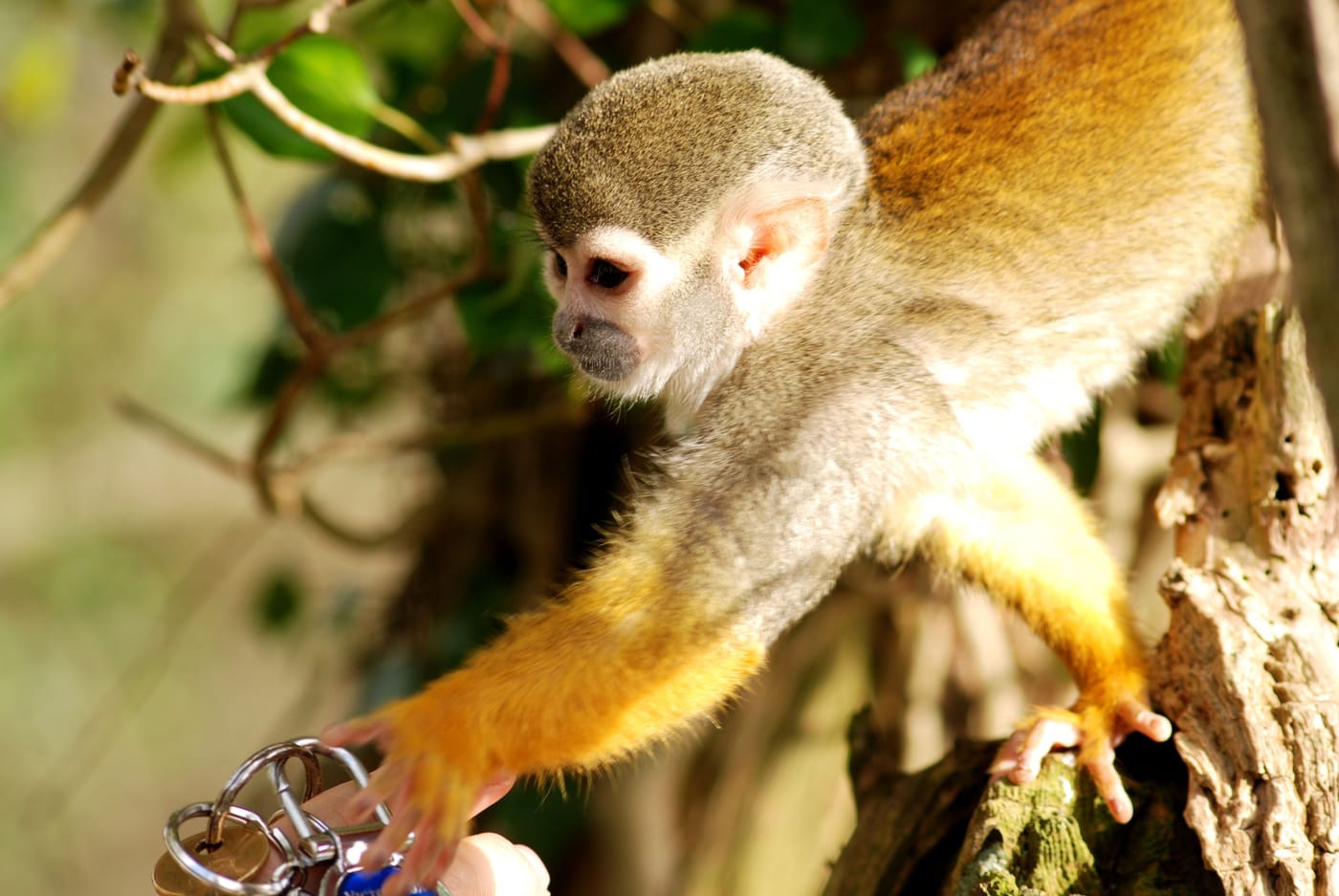
Researchers at Kyoto University's Institute for the Evolutionary Origins of Human Behavior set out to test whether curiosity in Japanese macaques follows the same pattern observed in humans, and what they found should resonate with anyone who has ever gone down a late-night internet rabbit hole for no practical reason whatsoever. The team built a touchscreen hide-and-seek game in which pressing one of two buttons caused a puppet to appear somewhere on the screen, with each button producing a different level of spatial unpredictability: one button placed the puppet in a fairly predictable location, the other in a nearly random one, and a third in between. The monkeys had no food reward, no mating opportunity, and no external incentive of any kind, and yet they played for nearly 100 rounds, consistently preferring the button that produced the moderately unpredictable puppet rather than the one that was too easy or too chaotic. The study, published in iScience, is the first to demonstrate the Goldilocks principle of curiosity in a nonhuman primate using a purely curiosity-driven task with no reward.
The finding matters because it confirms that curiosity is not simply a byproduct of hunger or tangible motivation but a genuine intrinsic drive that operates independently in animals whose evolutionary history intersects with our own. The lead researcher said she originally studied play behavior in wild monkeys and had long wanted to create conditions in the lab where natural curiosity could emerge on its own. The team hopes games like this could eventually enrich the lives of animals in zoos and laboratories by giving them something genuinely engaging to do. The first author noted that anyone who has ever kept scrolling for no particular reason already understands exactly what the macaques were feeling.
Source:https://www.earth.com/news/monkeys-prefer-games-that-leave-them-wanting-more-just-like-humans/