A California Garden Displayed Two Corpse Flowers At Once
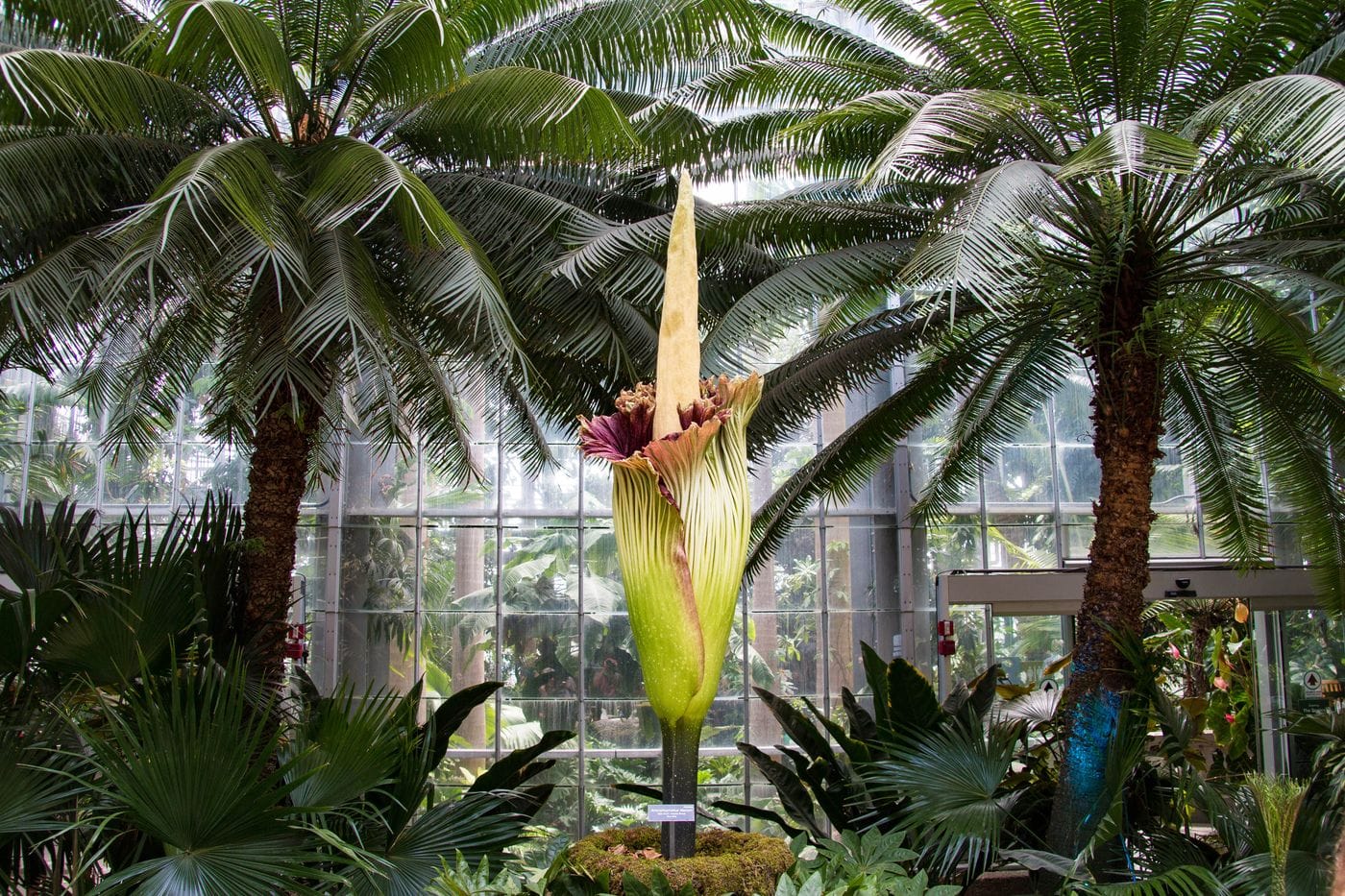
The Huntington Library, Art Museum, and Botanical Gardens in San Marino drew approximately 5,000 visitors on one day and 7,000 more the following day when two of its Titan Arum plants, the notoriously pungent flowering species known as corpse flowers, bloomed simultaneously for the first time in the institution's 107-year history. Tickets sold out and The Huntington extended its hours to ensure everyone who waited in line got inside, with some visitors reporting waits of more than three hours. The two plants, nicknamed Odora and Odorysseus, opened within hours of each other and released their famous rotting-flesh odor across the botanical gardens, drawing visitors from across Southern California who described the experience in terms ranging from incredible to very rough. Brandon Tam, The Huntington's associate curator of orchids, noted that children tend to offer the most vivid interpretations, variously comparing the smell to gym socks, rotten eggs, and, his own preferred description, a hot dumpster on a summer's day.
The Titan Arum, or Amorphophallus titanum, is native to the limestone rainforests of western Sumatra in Indonesia, where it is now endangered in the wild, and it blooms so infrequently and briefly, each flowering event lasting only 24 to 48 hours, that a single bloom draws significant attention from botanists and general audiences alike. A double bloom at one institution on the same day has almost no recorded precedent. Since 1999, The Huntington has publicly exhibited 29 corpse flower blooms, more than any other institution in the western United States, and Tam has become the institution's primary champion for what the spectacle means beyond its comedic appeal. He has compared the corpse flower to the giant panda: one is adorable, the other is frankly disgusting, but both draw crowds, and the public interest they generate fuels conservation momentum. By propagating and sharing Titan Arum specimens, botanical gardens reduce pressure on dwindling wild populations and support coordinated global conservation efforts. Twelve thousand people who waited hours to smell something genuinely terrible are, in some measurable way, helping to save it.
Source:https://laist.com/news/climate-environment/corpse-flower-blooming-at-the-huntington