A Wild Jaguar Has Been Spotted In Arizona 17 Times This Year. Conservationists Are Cautiously Thrilled.
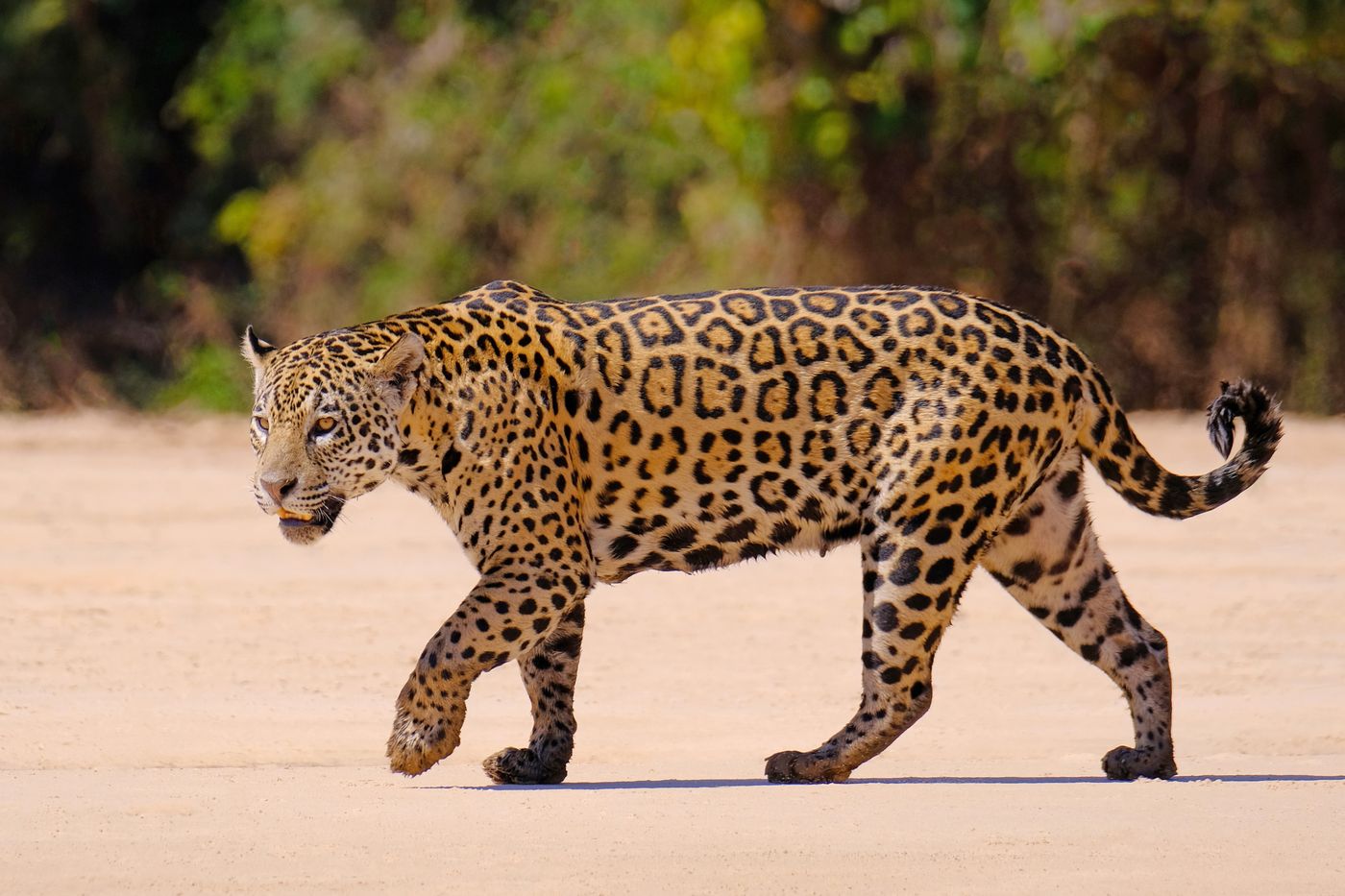
A trail camera set up by the University of Arizona's Wild Cat Research and Conservation Center near a streambed in the Sky Islands south of Tucson has captured footage of a male jaguar that researchers have named Cinco, who has been detected more than 17 times in the region since first appearing on camera in November 2025, making him only the fifth individual jaguar documented in Arizona in the past 15 years. Volunteer Chris Schnaufer hiked off-trail through rocky terrain and agave-covered slopes to reach the remote watering hole where the footage was captured, and what the camera recorded was a jaguar drinking calmly for nearly five minutes before disappearing back into the trees. Researchers at the University of Arizona describe Cinco as demonstrating site fidelity, meaning he has returned to the same drainages and mountain corridors repeatedly rather than passing through once, which Susan Malusa, the center's co-coordinator, described as meaningful evidence of continued presence and landscape use, a positive signal for a species in recovery. Only nine individual jaguars have been documented in southern Arizona and southeastern New Mexico since 1996, and every one of them is believed to have dispersed north from a breeding population centered in the Mexican state of Sonora.
Jaguars once ranged as far north as the Grand Canyon before hunting and habitat destruction eliminated them from the United States by the mid-20th century. Breeding has not been confirmed north of the US-Mexico border in over a century. The cats that appear in Arizona today, including Cinco, are dispersing males following mountain corridors north through the Sky Islands, and conservationists say their presence proves those corridors are still functional and that the habitat in southern Arizona is capable of supporting jaguars if the connection to Mexico is maintained. The Sky Islands region sits at the intersection of multiple ecosystems and serves as an umbrella habitat: Cinco's trail camera site also captured black bears, mountain lions, and bobcats in the same period, demonstrating the corridor's broader ecological value. Researchers note that fringe populations like Arizona's are valuable beyond their numbers because they are adapting to hotter and drier conditions that may prove important as climate change reshapes the jaguar's range across Latin America. An estimated 173,000 jaguars survive worldwide, with more than half in Brazil, and international conservation initiatives continue expanding protected habitat across the jaguar's range. In Arizona, each sighting by researchers is treated as an opportunity to document exactly which corridors still remain open, and Cinco's 17-plus appearances through the spring of 2026 represent more sustained presence data than researchers have had from a single Arizona jaguar in years.
Source:https://happyeconews.com/rare-jaguar-sighting-in-arizona-offers-hope/