India Painted A Section Of Highway Bright Red To Protect Tigers
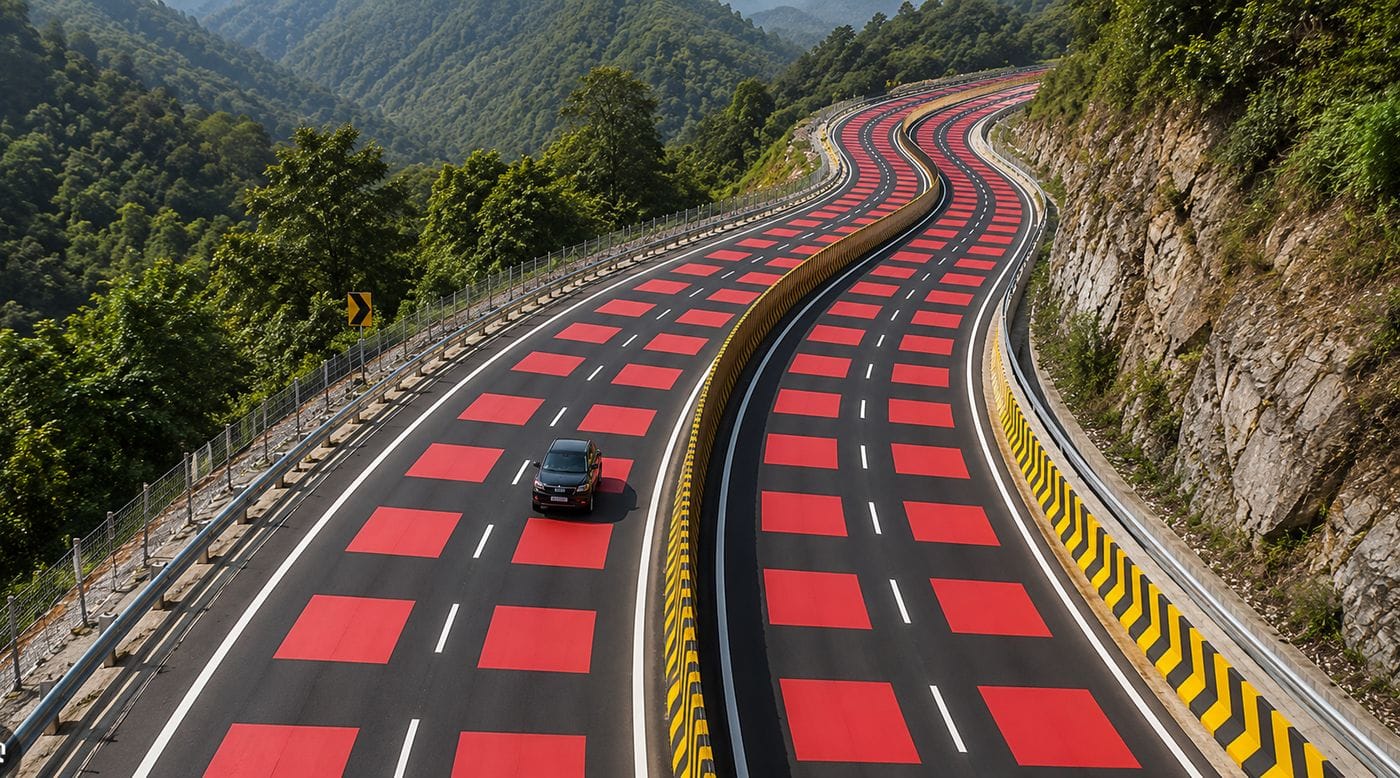
When a cheetah cub was killed by a vehicle on a highway in Madhya Pradesh, India's National Highways Authority responded not with a speed camera or a warning sign but with a coat of bright red paint, and the reasoning behind that choice is a small masterclass in applied psychology. Along a 2-kilometer stretch of National Highway 45, the road that connects Bhopal and Jabalpur and cuts directly through the Veerangana Durgavati Tiger Reserve, the NHAI applied a 5-millimeter-thick thermoplastic red surface layer in a chequered pattern across the asphalt, creating what it describes as India's first wildlife-safe road corridor. The color red is processed in the human brain as an instinctive warning before any conscious reasoning kicks in, meaning drivers approach the red zone and feel the urge to slow down before they have read a single sign or spotted a single animal. The slightly raised texture of the thermoplastic adds a physical dimension to that signal, with vehicles feeling the road change beneath their tires in addition to seeing it, and embedded speed sensors in the surface can detect vehicles moving too fast through the zone.
The red paint is only one piece of a broader 11.96-kilometer wildlife-safe corridor that also includes 25 dedicated animal underpasses, constructed beneath the highway at the specific locations where camera and field data showed wildlife most frequently attempted to cross, and an eight-foot-high iron fence running along both sides of the road to prevent animals from wandering onto the asphalt and to funnel them toward the safe passages below. The Veerangana Durgavati Tiger Reserve is home to Bengal tigers, leopards, sloth bears, wolves, and the four-horned antelope, and the highway had long cut directly through their movement corridors, with nighttime crossings posing the highest risk because animals were often attracted to the warmth and light of the road surface. Research on similar projects worldwide has found that wildlife fencing combined with underpasses reduces large mammal collisions by roughly 83 percent when the fenced corridor is long enough to be effective. The red road design was partly inspired by red-painted speed zones on Sheikh Zayed Road in Dubai, applied here to a very different context and for very different stakes. If the pilot succeeds, the NHAI has indicated it could become a template for future highway construction through India's many protected wildlife areas, a country that holds more tigers than any other on Earth.
Source:https://www.goodgoodgood.co/articles/wildlife-crossings-protection-india-red-road