Scientists Discovered Earth Has Three Times More Insect Species Than We Thought.
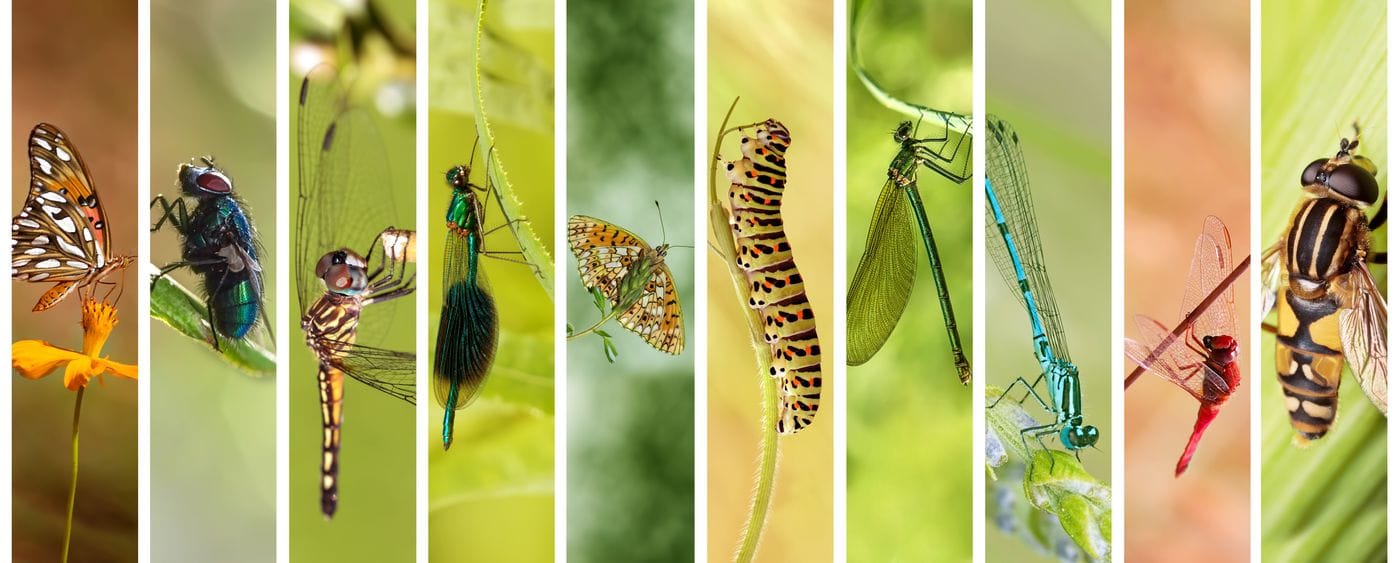
Scientists studying insect biodiversity in a protected rainforest in northwestern Costa Rica have published a new estimate in the Proceedings of the National Academy of Sciences suggesting that Earth is home to between 14 and 20 million insect species, and possibly as many as 30 million under a wider range of uncertainty, more than two to three times the commonly accepted global estimate of approximately six million species. The study, led by Cornell University entomologist Laura Melissa Guzman alongside University of Connecticut Professor Emeritus Robert Colwell and University of Kentucky Professor Emeritus Michael Sharkey, is built on one of the most intensive tropical insect inventories ever assembled: researchers analyzed more than 1.6 million individual insects collected from 15 Malaise traps, tent-like nets that catch flying insects, across the dry forest, cloud forest, and rainforest ecosystems of the Área de Conservación Guanacaste in Costa Rica, a protected World Heritage Site that has been studied by scientists for more than 40 years. DNA barcoding of those 1.6 million insects identified nearly 54,000 distinct species at just that one site alone. Only around one million insect species have ever been formally named and described anywhere on Earth.
To translate a local survey into a global estimate, the team focused on a deeply studied subgroup called Microgastrinae, tiny parasitoid wasps that lay their eggs inside living caterpillars and whose larvae hatch and consume the host from within before emerging. Because these wasps are both highly diverse and massively understudied relative to more charismatic insect groups, they offered an unusually sensitive measuring stick for how incomplete even an exhaustive sampling effort actually is. Using statistical models borrowed from epidemiology, originally developed to track hepatitis outbreaks by comparing reported and unreported cases, the team estimated that the true number of Microgastrinae species in the study area was far higher than those caught, and applied that ratio across the full insect sample and then to the globe, using known diversity ratios for trees, birds, frogs, and moths to calibrate the projection. Colwell told Popular Science that even after 69 trap-years of collecting and more than 1.6 million individual insects, the team still had not captured everything living right there in the same forest, and that the statistical challenge is estimating not just what you have seen but how much you are missing. The lead researchers described their numbers as conservative and said the findings provide a baseline for understanding the true scope of current insect declines, adding urgency to conservation efforts at a moment when the so-called Insect Apocalypse is already underway.