
Google Asked The EPA To Release 32 Million Mosquitoes
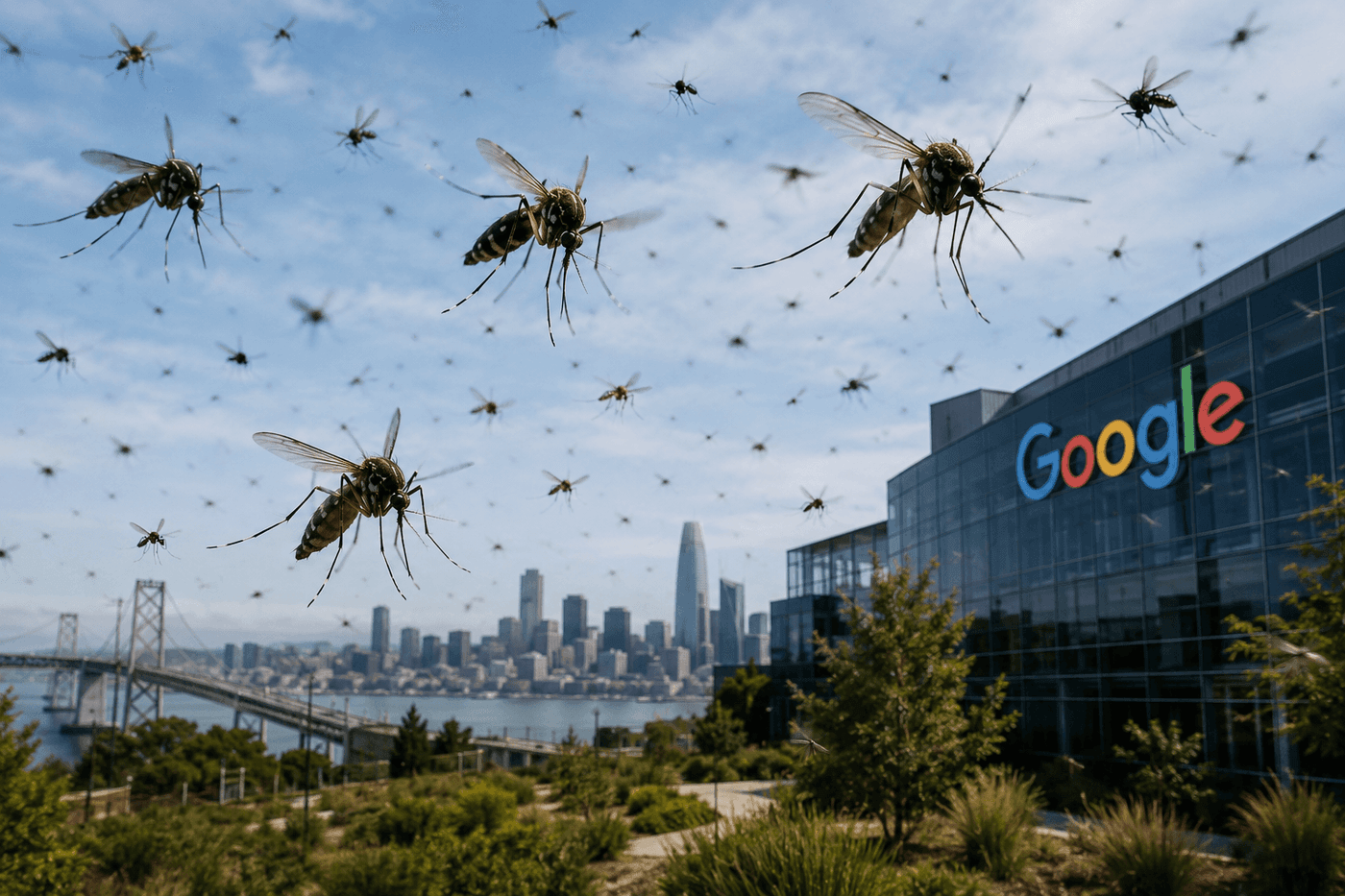
Google's life sciences division Verily has filed an application with the US Environmental Protection Agency requesting permission to release up to 32 million specially treated male mosquitoes across California and Florida over two years, in a project that sounds alarming on the surface and is, according to entomologists, one of the most elegant and proven pest control strategies that exists. The program, called Debug, works by introducing a naturally occurring bacteria called Wolbachia into healthy male mosquitoes in the lab before releasing them into the wild, where they mate with wild female Aedes aegypti mosquitoes, the disease-spreading species responsible for dengue fever, Zika, chikungunya, yellow fever, and other illnesses. Because the wild females do not carry the same Wolbachia strain, the fertilized eggs they produce after mating with a Debug male do not hatch, gradually reducing the population of disease-spreading mosquitoes over repeated release cycles. Critically, only males are released, and male mosquitoes feed on flower nectar rather than blood, meaning the 32 million mosquitoes going out into California and Florida cannot bite anyone.
The technique is not new: sterile insect methods have been used for decades to suppress populations of fruit flies, screwworms, and moths, and Chris Grinter, an entomologist at the California Academy of Sciences, describes it as a genius approach that has been used to completely eradicate or severely reduce numbers of serious pests and vectors. Debug has already proven it works at scale in Singapore, where it has supported the National Environment Agency's Project Wolbachia since 2018, achieving an 80 to 90 percent suppression of Aedes aegypti populations in treated areas. Verily also ran a smaller California trial in 2017, establishing domestic proof of concept. The EPA received the two applications in 2025 and issued a public notice in May 2026, accepting public comments through June 5 before making a final decision. No permit has been granted yet. Google frames the approach as a response to the growing limitations of traditional mosquito control: pesticide resistance is increasing, standing water can never be fully eliminated, and most mosquito-borne diseases still lack effective vaccines or treatments, leaving population suppression as the most reliable tool available.














