
NASA Just Beamed 484 Gigabytes From The Moon Using Lasers And It Changes How We Will Experience Deep Space
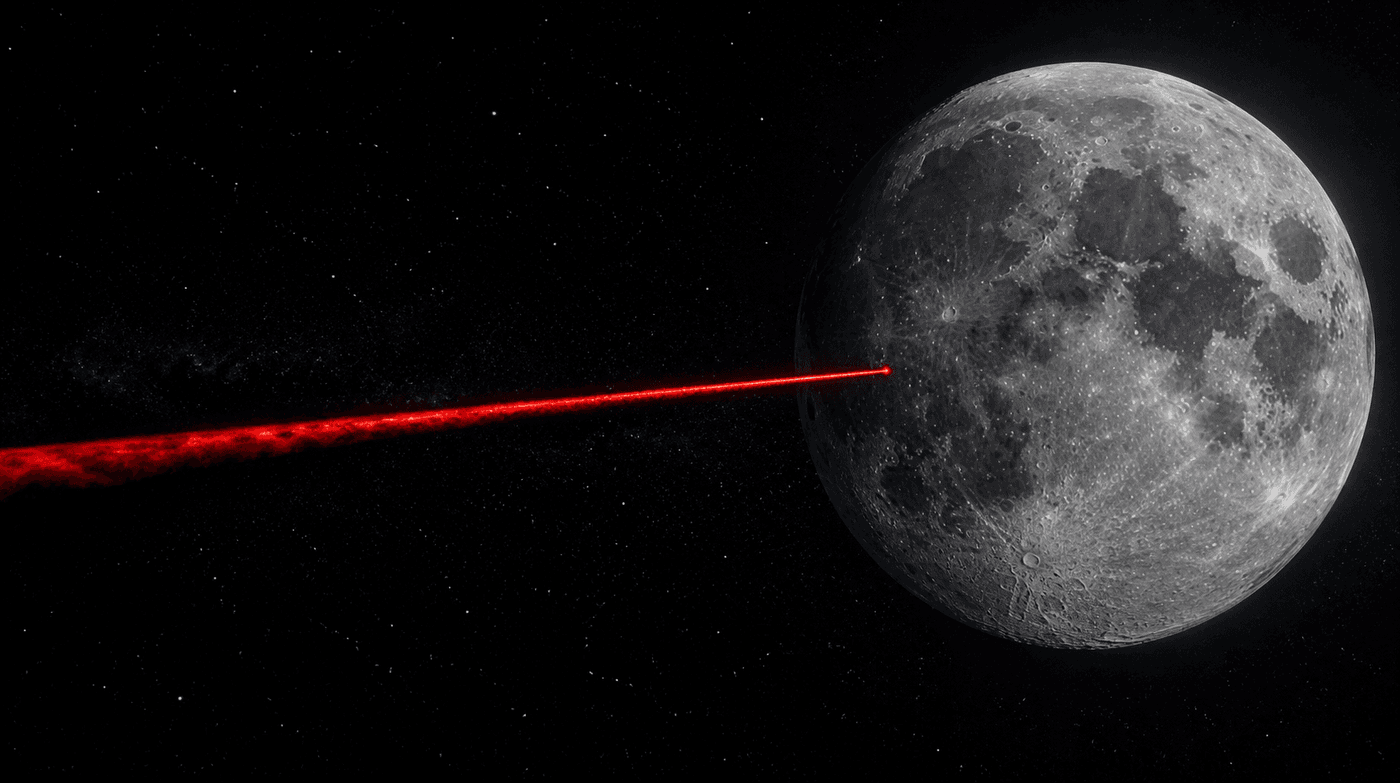
During the Artemis II mission, NASA deployed a laser-based communication system on the Orion spacecraft that successfully transmitted 484 gigabytes of data from lunar distance back to Earth, the equivalent of streaming roughly 100 high-definition movies, in a demonstration that engineers say could fundamentally change how future deep-space missions are conducted and experienced. The system, called the Orion Artemis II Optical Communications System and developed by MIT Lincoln Laboratory, uses invisible infrared light instead of traditional radio waves, allowing it to deliver data at speeds of up to 260 megabits per second, far surpassing the single-digit megabit speeds that radio systems achieve at lunar distances. Ground stations in California, New Mexico, and at Australia's Mount Stromlo Observatory received the transmissions, with one station pulling down 26 gigabytes of data in under an hour at a rate comparable to many home internet connections. For the mission's science team, the difference was immediate: near real-time delivery of high-resolution imagery allowed researchers on Earth to analyze data almost as it was collected, rather than waiting hours or days.
For the millions of people who followed Artemis II, the system was the reason the mission looked and felt like nothing before it. Viewers were able to watch sharp, fluid video of the crew in the spacecraft, see iconic Earthrise footage from lunar distance, and observe the passage behind the Moon as it happened rather than reading text summaries of what occurred. The NASA science lead for Artemis II said it felt as though they were right there with the crew, and that the system maximized the scientific impact of the mission entirely. Engineers are now preparing to fly upgraded versions of the optical system on future lunar and Mars missions, with a goal of eventually making real-time video from the surface of Mars as routine as a video call.
Source:https://dailygalaxy.com/2026/05/nasa-just-beamed-484-gigabytes-from-moon/














