
Scientists Discover Why The T. Rex Had Such Tiny Arms And The Answer Is Hilarious
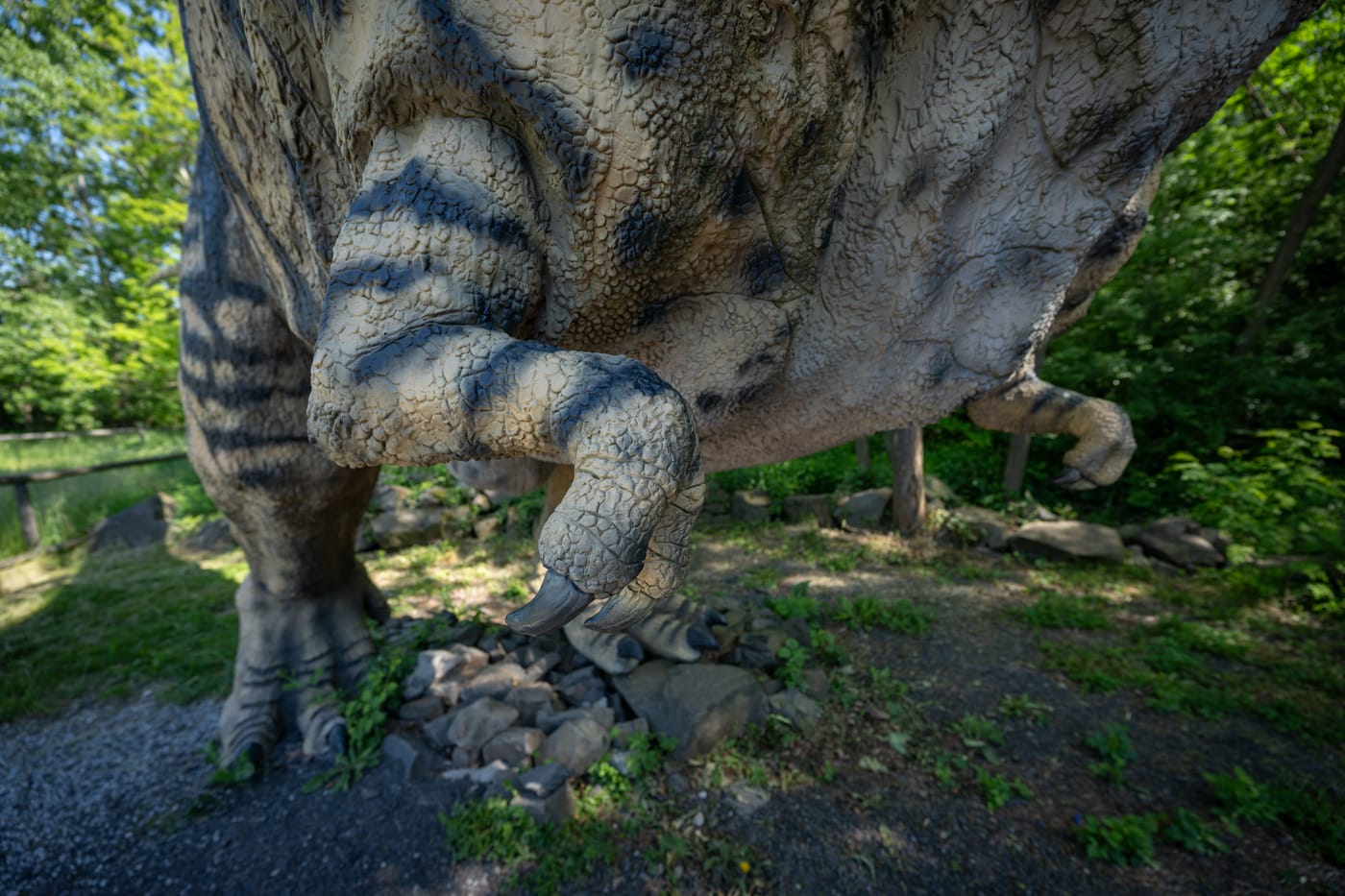
For decades, the T. rex's comically small arms have been one of paleontology's great mysteries. The most fearsome predator to ever walk the earth, built like a school bus with teeth, had arms roughly three feet long. Shorter than a human child's. Scientists proposed all kinds of theories over the years. Now, a study published May 20 in Proceedings of the Royal Society B has what researchers believe is the actual answer: the T. rex's arms shrank because its skull got so powerful. As these giant theropods increasingly relied on their heads to hunt and kill, their arms simply became redundant. Evolution, being ruthlessly efficient, started shrinking them. "If you've got a big skull and you're tackling big prey, you don't need your arms as much," said study co-author Elizabeth Steell, a paleontologist at the University of Cambridge. "Arms become a bit redundant." The research team studied 85 non-avian theropod species and found a strong correlation between skull strength and forelimb size. The stronger the skull, the tinier the arms, almost without exception.
The T. rex scored the highest cranial strength of any species in the study. Everything it hunted was approached headfirst. Its jaws could deliver one of the most powerful bites of any animal that ever lived. Why bother having big arms at all? "That was the easiest way to bring them down, as opposed to jumping around or fighting with claws," said study co-author Charlie Scherer of University College London. The tiny arms were not a flaw. They were a trade. The T. rex gave up its forearms for the most powerful skull in dinosaur history. Given the results, it was probably a good deal.














