
Scientists Rewrote Everything We Knew About How T. Rex Grew!
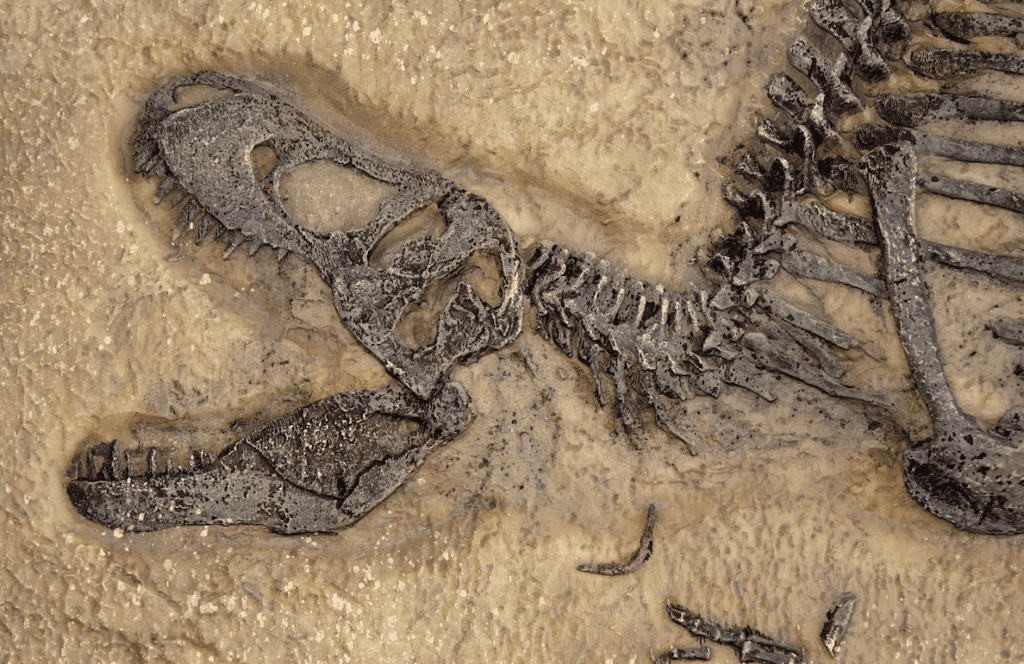
For decades, paleontologists believed that Tyrannosaurus rex reached its full adult size of roughly eight tons by around age 25, making it a relatively fast-maturing giant by dinosaur standards. A major new study published in the journal PeerJ has upended that understanding entirely, finding that T. rex likely continued growing for about 40 years before reaching maximum size, extending the previous estimate by 15 years and fundamentally changing how scientists understand the life history of the most famous predator that ever lived. The research, led by Holly Woodward, a professor of anatomy at Oklahoma State University, assembled the largest dataset ever compiled for Tyrannosaurus rex, examining growth rings hidden inside fossil bone cross-sections from 17 tyrannosaur specimens spanning a wide range of ages from juveniles to massive adults. By using specialized lighting techniques that reveal growth rings invisible to standard examination, and new statistical models that stitch together bone growth records from multiple individuals of different ages, the team reconstructed a complete growth curve for T. rex more detailed than any previous attempt.
The finding changes more than just the timeline. A four-decade growth period suggests that younger tyrannosaurs occupied meaningfully different ecological niches from fully grown adults as they matured, eating different prey and competing differently within their environments, a dynamic that helps explain how a landscape could support multiple T. rex individuals of radically different sizes at the same time. The study also carries a second bombshell: researchers found evidence that some fossils traditionally classified as Tyrannosaurus rex may actually belong to other closely related tyrannosaur species, or differ for other significant biological reasons. Whether those differences reflect separate species, sexual dimorphism, or something else entirely remains an open question, but the implication is that the most-studied dinosaur in history may still be hiding its secrets more than 130 years after the first specimen was formally described. Nathan Myhrvold, the mathematician and paleobiologist who led the statistical modeling, said the composite growth curve provides a much more realistic view of how Tyrannosaurus grew and how much individuals varied in size, and that the work opens entirely new questions about tyrannosaur diversity that no one was asking before.
Source:https://www.sciencedaily.com/releases/2026/06/260621110957.htm














