
Nature

Recent Content

One Winner Could Win A Year Of Pizza

October 18, 2026

One Winner Could Win A Year Of Pizza

Brazil Just Ended The Six-Day Workweek

October 18, 2026

Brazil Just Ended The Six-Day Workweek

Logo
Terms and ConditionsDo Not Sell or Share My Personal InformationPrivacy PolicyPrivacy NoticeAccessibility NoticeUnsubscribe
Copyright © 2026 Happy News
logo
  • Happy Mindset
  • Happy Health
  • Animal Wonders
  • Happy News
  • About Us
  • Subscribe!
  • Happy Mindset
  • Happy Health
  • Animal Wonders
  • Happy News
  • About Us
  • Subscribe!
  • ​

Scientists Mapped An Underground Fungal Network So Vast It Could Reach The Sun One Billion Times.
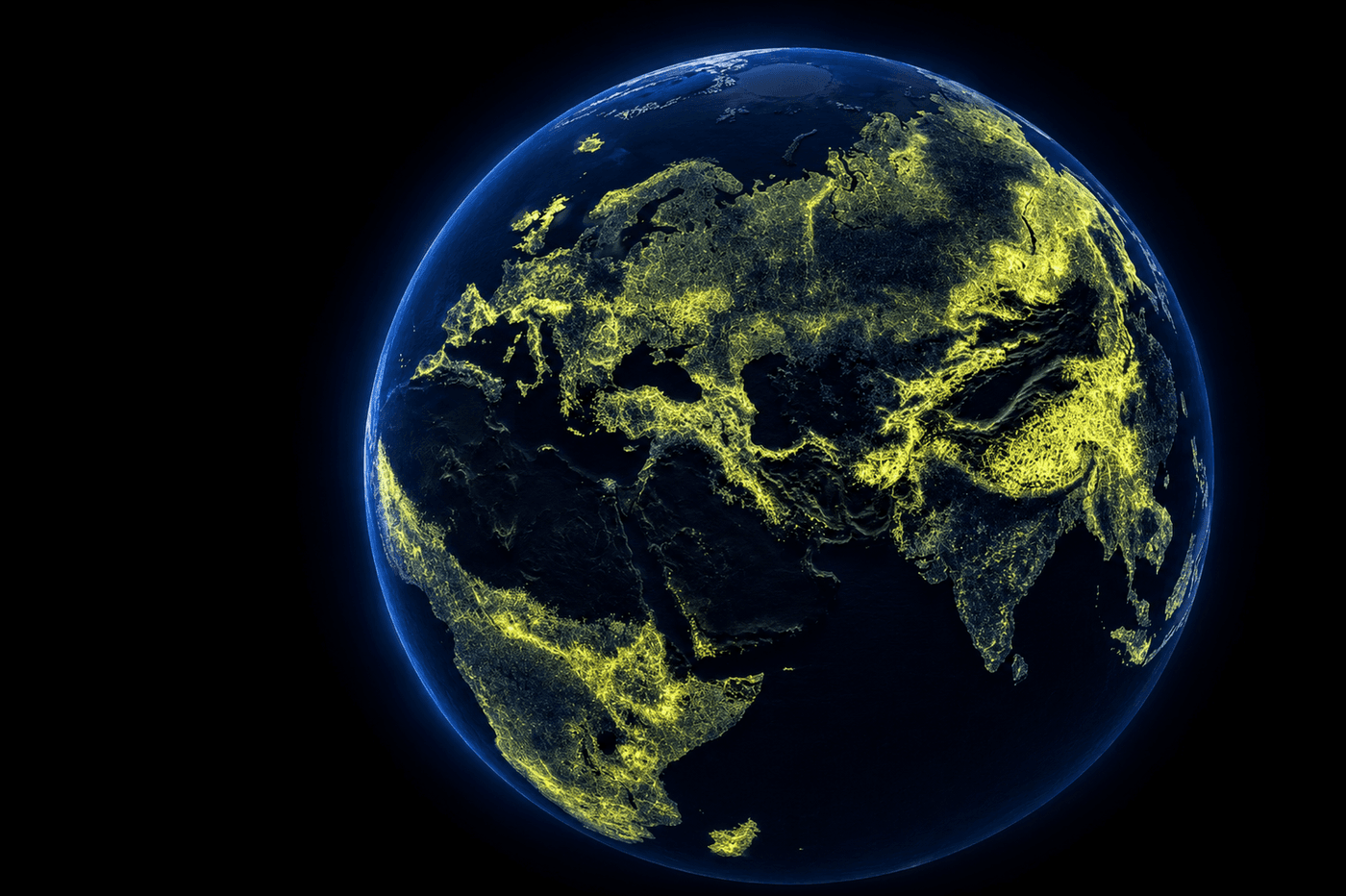
Global map of arbuscular mycorrhizal fungal networks Earth topsoil Science journal SPUN 2026

Beneath your feet, there is a fungal network stretching through every forest, meadow, and garden on Earth so vast that scientists have only just managed to map it for the first time. A study in the journal Science reveals that Earth's topsoil contains around 68 quadrillion miles of these arbuscular mycorrhizal fungal networks, equal to nearly one billion times the distance from Earth to the Sun. In a single teaspoon of healthy soil, there can be up to 32 feet of microscopic threads. The fungi have partnered with plant roots for 500 million years, acting as an underground internet ferrying water, nutrients, and carbon between plants and soil. Around 90 percent of all plant species depend on these partnerships. The research team used machine learning to analyze more than 16,000 soil samples and produce the first-ever global map of these networks. "It makes part of the invisible visible," said one scientist not involved in the study.

AM fungi store around 330 million tons of carbon, four to six times the carbon in all living humans, and move the equivalent of 4.4 billion tons of CO2 into soils every year, about 11 percent of all human CO2 output. Wild grasslands in South Sudan, the Tibetan Plateau, and the Florida Everglades hold 40 percent of the planet's AM fungal biomass but are among the least protected ecosystems on Earth. Croplands have roughly half the fungal density of wild ecosystems. The map is available as a free interactive online tool. For the researchers, it is both a scientific milestone and an urgent conservation call. What has been invisible for half a billion years finally has a face.


Source:https://www.smithsonianmag.com/smart-news/nearly-all-plants-depend-on-tiny-underground-fungi-the-microbes-vast-global-networks-were-just-mapped-for-the-first-time-180988955/

Related Content

10 August 2026

Underwater Bubble Curtains Are Stopping River Plastic

10 August 2026

City Builds Underground Tunnels Just For Salamanders

08 August 2026

Jaguar Spotted In Arizona 17 Times This Year

08 August 2026

Sea Turtle Nests Breaks Records

07 August 2026

California Produced More Than Half Its Electricity From Solar

06 August 2026

Mountain Lions Are Making Roads Safer

05 August 2026

MIT Created A Yarn Made From Milk Bottles

04 August 2026

Engineering Students Built A Solar-Powered Ambulance

18 July 2026

How India Used Color Psychology When Building Highways

16 July 2026

A California Garden Displayed Two Corpse Flowers At Once

These Squirrels Ate Better Than Most PEOPLE On Thanksgiving

11 July 2026

This Tiny Cold Squirrel Could Change Medicine

10 July 2026

Scotland Made It A Criminal Offence To Own A Glue Trap

05 July 2026

Scientists Discovered Earth Has Three Times More Insect Species Than We Thought

03 July 2026

New Law Penalizing Shein And Fast Fashion

02 July 2026

Australia Gives Every Household Three Free Hours Of Electricity A Day












