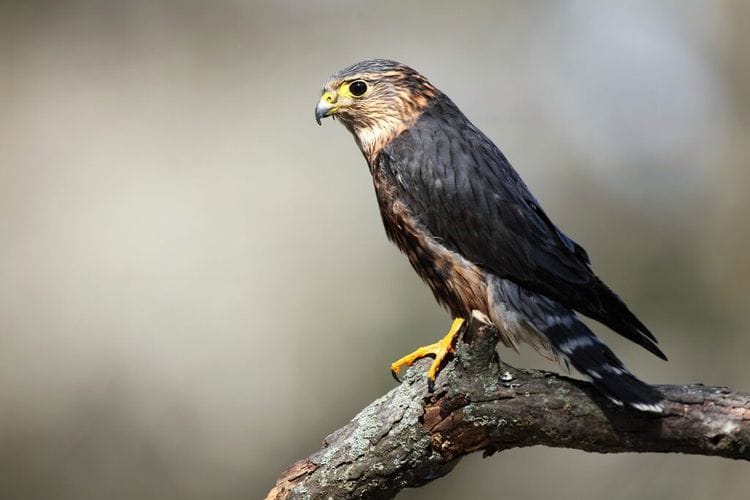
Michigan cherry farmers are discovering that America’s smallest falcon is becoming their most valuable partner in fighting both crop damage and a hidden food safety threat that has been rising across the state and around the world. The American kestrel, a pint sized raptor that hovers in midair while scanning the ground for insects, mice and small birds, is being recruited to patrol cherry orchards through a simple and inexpensive solution of installing nest boxes on farmland. According to groundbreaking research from Michigan State University published in the Journal of Applied Ecology, orchards frequented by nesting kestrels saw damaged fruit drop dramatically from 2.5 percent to just 0.47 percent, while contamination from bird droppings decreased threefold from 6.88 percent to 2.33 percent. The real concern for farmers goes beyond the cherries that hungry songbirds like robins eat, because bird droppings can carry Campylobacter bacteria which is a common cause of food poisoning, and DNA analysis revealed that over 10 percent of the droppings found in orchards contained this dangerous pathogen.
Lead author Olivia Smith, an assistant professor of horticulture at Michigan State University, explained that it is hard to keep birds out of crops and traditional methods like nets, noise makers, scarecrows and sprays can be costly and do not always work, with sweet cherry growers in Michigan, Washington, California and Oregon still losing anywhere from 5 to 30 percent of their crop to birds each year even with control measures in place. The solution works because kestrels are skilled hunters whose presence creates what researchers call a landscape of fear for smaller fruit eating birds who are afraid of being eaten, and in Michigan’s cherry growing region the falcons are so abundant that 80 to 100 percent of installed nest boxes become home for kestrels rather than other nesting birds. A single nest box costs around 115 dollars to purchase and install with only 22 dollars and 50 cents per year for maintenance, which is dramatically cheaper than bird netting that costs 1,700 dollars per roll to install and requires intensive labor. Brad Thatcher, an organic farmer in Washington state who has housed kestrels on his farm for over 13 years, says he has noticed a real difference having the kestrels around hovering over spring crops with very little fecal damage from small songbirds compared to fall when the falcons are not present.