
This Fish Has Lived For 100,000 Years Without Males
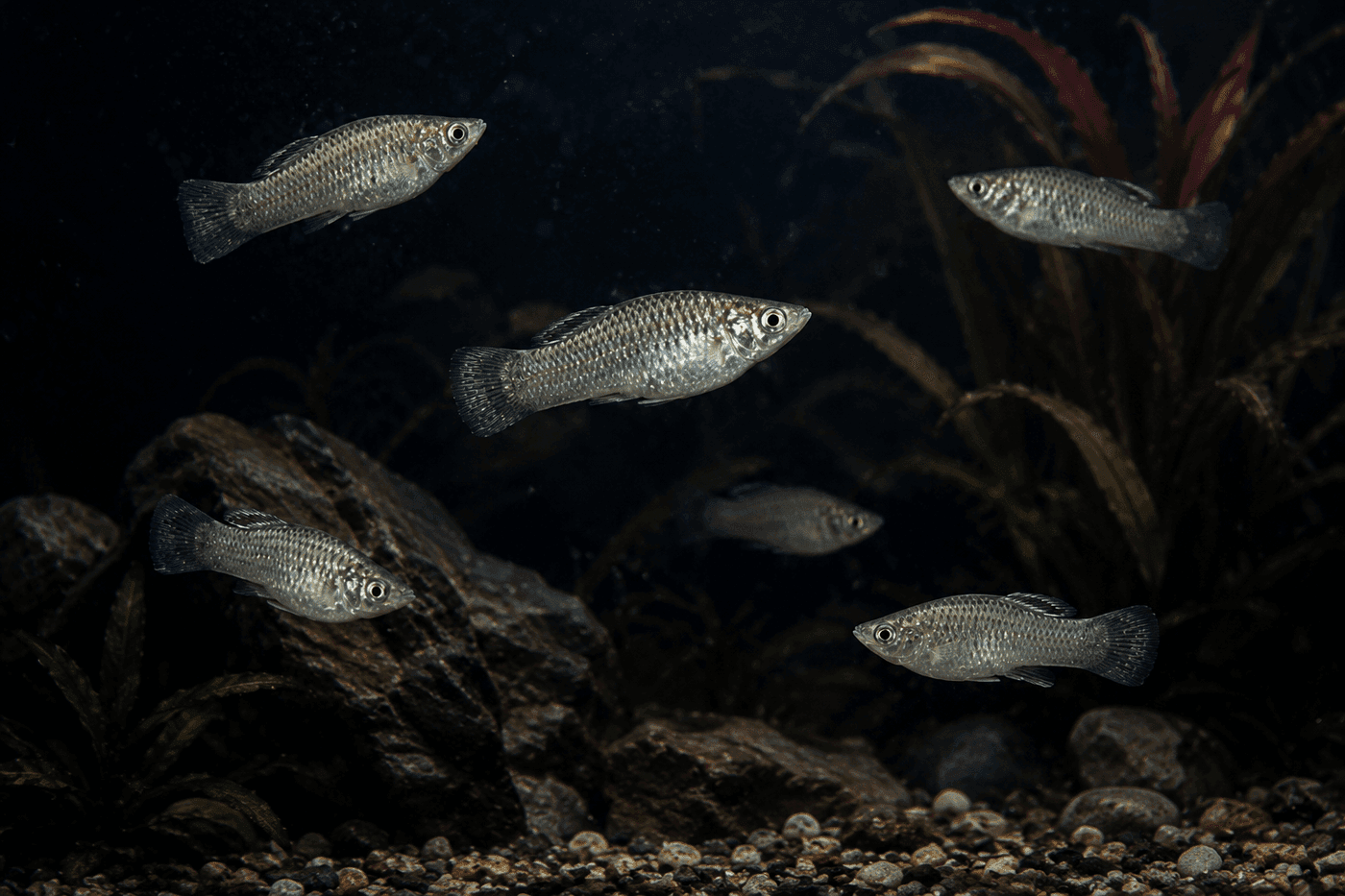
In the rivers of Mexico and southern Texas swims a small silver fish called the Amazon molly that has done something evolutionary theory says should be impossible: survived for approximately 100,000 years as an all-female species without sexual reproduction, producing only daughters, each one a genetic clone of its mother. Named after the all-female warriors of Greek mythology, the Amazon molly uses the sperm of males from closely related species only to trigger egg development, then promptly discards the male's DNA entirely, a biological maneuver called gynogenesis. The problem, according to standard evolutionary theory, is that without the genetic reshuffling that sex provides, harmful mutations should have accumulated over generations until the species collapsed, a process called Muller's ratchet. The Amazon molly has been defying that prediction for a hundred thousand years, and scientists have spent nearly a century puzzling over how. A new study from the Ludwig Maximilian University of Munich has finally found the answer.
The key turns out to be an accelerated version of a cellular repair process called gene conversion, a mechanism that exists in most organisms, including humans, but that operates far more aggressively in the Amazon molly than in any species studied before. Gene conversion works as a kind of copy-and-paste system, using one copy of a gene as a template to repair a damaged or mutated version of the same gene, quietly fixing errors before they can accumulate and compound. Researchers found that in the Amazon molly this process happens most intensively in exactly the regions of the genome where the most dangerous mutations would be expected to strike, effectively giving the fish an alternative route to the same genetic housekeeping that sex provides for most other species. The dual genetic heritage the molly inherited when it first arose from a single crossbreeding event 100,000 years ago, carrying genes from two ancestral species, appears to give the repair mechanism enough variation to work with. Lead researcher Edward Ricemeyer said the study overturns a long-held assumption, showing that sexual reproduction is not the only proper way to keep a genome healthy, just the most common one, and that nature, characteristically, found another way.














