Why We Evolved To Walk On Two Feet
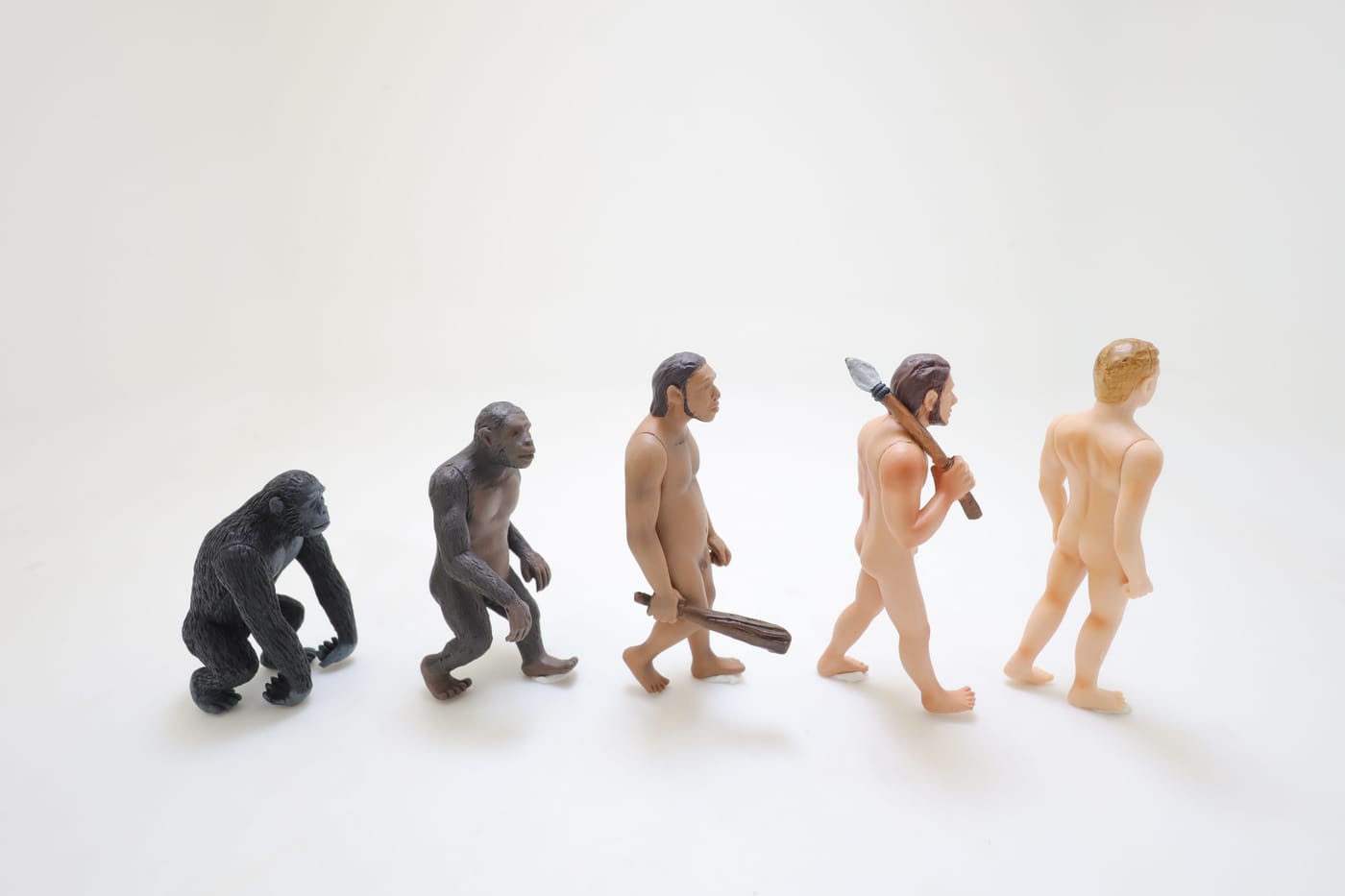
One of the oldest and most debated questions in human evolutionary science is whether the ancestor we shared with chimpanzees and gorillas moved around on its knuckles, the way those great apes still do today, or whether our lineage evolved upright walking from a more generalized posture that never involved knuckle walking at all. The answer matters because it changes the entire story of how and why humans began walking on two feet. A new study published in Proceedings of the Royal Society B, the most comprehensive analysis of primate wrist bones ever conducted, examined thousands of wrist bones from 523 individual primates spanning more than 70 species, and concluded that human wrists share a suite of distinctive features with gorillas and chimpanzees that are most plausibly explained by descent from a shared knuckle-walking ancestor. The lead author, Laura Hunter, who conducted the research as a PhD student at the University of Chicago, found that two specific bones on the thumb side of the wrist, the scaphoid and centrale, are fused together in both hominins and African apes, an adaptation researchers believe helped stabilize the joint during the mechanical demands of knuckle walking.
The significance of the finding is not simply that our ancestors may have knuckle-walked, but what it reveals about the path from knuckles to upright stride. The study suggests that some of the wrist anatomy we inherited from that common ancestor may have persisted in the human lineage not because it was needed for knuckle walking anymore, but because it turned out to be useful for something else entirely: manipulating objects, making tools, and performing the fine motor tasks that became central to human survival and culture. The distinctly human adaptations on the wrist, the features associated with sophisticated tool manufacture, only became consistent in later members of the genus Homo, meaning our hands evolved in stages, with some architecture inherited and some entirely new. The director of the Department of Human Origins at the Max Planck Institute for Evolutionary Anthropology, who was not involved in the study, called the work excellent and said it reveals traits that could have been advantageous for knuckle walking in the common ancestor of humans and African apes. The story of how we came to stand upright, it turns out, begins on our hands.